Weekly Fantasy Baseball Rankings update for September 4: New Top 700 Prospect Rankings released

Weekly Fantasy Baseball Rankings update for September 4: New Top 700 Prospect Rankings released

As we roll out our latest update to the RotoProspects Top 700 Prospect fantasy baseball rankings, let’s dive into the key updates surrounding the top-ranked prospects this week.

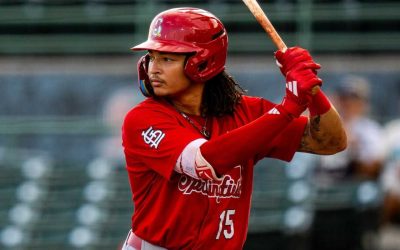
Athletics’ Devin Taylor climbs into the Top 100 after a promotion to Triple-A

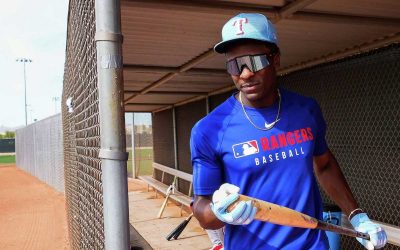
Taylor (pictured above, No. 93, up from No. 126) has been a steady riser all year, and this week’s jump comes on the back of a promotion to Triple-A Las Vegas after hitting .323 with 14 home runs, 54 RBI, and a .943 OPS across 90 games at Double-A Midland. A 2025 second-round pick out of Indiana who signed for $2.5 million, Taylor set the Hoosiers’ all-time home run record and has continued to hit at every stop as a pro. He’s now one step from the majors, and his blend of strike-zone control and plus raw power gives him a real shot at everyday outfield at-bats down the line.

Yankees’ Yostin Pena continues his teenage tear, climbing into the Top 120

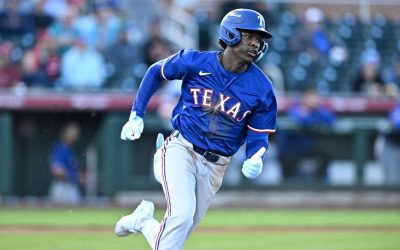
Pena (No. 119, up from No. 150) keeps rising fast for an 18-year-old who skipped the complex league entirely after a torrid Dominican Summer League stretch. He’s slashing .275/.385/.425 with 9 home runs, 47 RBI, and 34 stolen bases at Single-A Tampa, and his exit velocities are already elite for his age — a 90th-percentile mark around 108 mph and a peak north of 113. The chase rate and swing-and-miss are still works in progress, but few teenage bats in the minors are hitting the ball this hard.

Marlins’ Brandon Compton earns a Triple-A promotion after a historic power binge

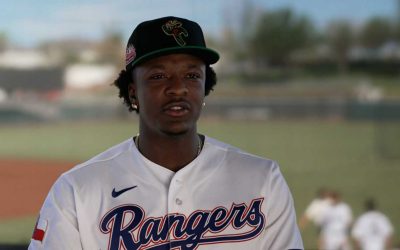
Compton (No. 109, up from No. 135) has been the hottest bat in the minors over the last month and has now been bumped all the way up to Triple-A as a reward. He set a Double-A Pensacola franchise record with 12 home runs in July alone, and across all levels this season he’s slashing .277/.426/.596 with 30 home runs, 18 stolen bases, and a 164 wRC+ — best among all qualified Marlins farmhands. A former two-way college player who had Tommy John surgery before ever throwing a pro pitch, Compton has simplified his approach and is now squarely on the radar in deep dynasty formats.

Brewers’ Eric Bitonti keeps mashing, climbing into the Top 220

Bitonti (No. 213, up from No. 309) has already crossed 60 home runs in the minors before turning 21, and he’s in the middle of another hot stretch — 10 extra-base hits over his last two weeks pushed his season OPS to .934. The 6-foot-5 lefty first baseman has drawn Kyle Schwarber comparisons for his combination of massive raw power and a fly-ball-heavy approach, though the swing-and-miss remains a real question for the hit tool long-term.

The Top 25 players in this week’s updated RotoProspects Top 700 Prospect Rankings

The Top 50 can be found HERE (no subscription required). For the complete list, CLICK HERE (subscription required).

No.NamePosTeamB/TLevelAge
1Jesus MadeSSMILS/RAA19
2Leo De VriesSSATHS/RAA19
3Walker JenkinsOFMINL/RMLB21
4Theo Gillen2B/SSTBL/RAA20
5Sebastian WalcottSSTEXR/RAA20
6Josue De PaulaOFLADL/LAA21
7Ryan SloanSPSEAR/RAA20
8Kade AndersonSPSEAL/LMLB22
9Seth HernandezSPPITR/RHigh-A (IL)20
10Eli WillitsSSWASS/RHigh-A18
11Rainiel RodriguezCSTLR/RAA19
12Joshua BaezOFSTLR/RMLB23
13Max ClarkOFDETL/LMLB21
14Eric HartmanOFATLL/RAA20
15Franklin AriasSSBOSR/RAAA20
16Mike SirotaOFLADR/RAA23
17George Lombard Jr.SSNYYR/RMLB21
18Angel GenaoSSCLES/RMLB22
19Ralphy Velazquez1BCLEL/RAAA21
20Braylon PayneOFMILL/LAAA19
21Vahn LackeyCMINR/RHigh-A21
22Drew BurressOFATHR/RSingle-A21
23Luis HernandezSSSFR/RSingle-A17
24Josuar GonzalezSSSFS/RSingle-A18
25Zyhir HopeOFDETL/LAA21

Power Risers: The Top 10 fastest-climbing prospects in this week’s Top 700 update (Sept. 4)

We update our fantasy baseball Top 700 Prospect Rankings weekly, and we keep track of the prospects who are rising the quickest to let fantasy baseball owners know about some prospects who are gaining momentum before you even hear about them elsewhere. This list comes out in tandem with the updated Top 700 fantasy baseball prospects list.

A power ranking of the fastest risers

Here’s our Power Rankings of the Top 10 fastest risers in this week’s update of the Top 700 Prospect Rankings. The entire list of the fastest risers, which includes the player’s major-league ETA, number of spots moved up and current new position in the Top 700, can be found HERE (subscription required).

1. Leo Bernal, C, Cardinals — MLB, Age 22

Bernal got the call as part of September roster expansion and delivered immediately — a two-run single in his MLB debut against the Dodgers, then a two-run homer the very next night. The switch-hitting catcher posted career highs at Triple-A Memphis this year (.278/.363/.831 OPS, 16 HR, 77 RBI), and the Cardinals see him as a real defensive upgrade behind the plate. This is easily the most electric debut on this list.

2. Eric Bitonti, 1B, Brewers — High-A, Age 20

Few prospects in baseball hit the ball as far as Bitonti. He’s already crossed 60 minor league home runs before turning 21, and he’s currently riding a stretch with 10 extra-base hits over two weeks that’s pushed his season OPS to .934. The hit tool remains a real question given his elevated strikeout rate, but the raw power is some of the loudest in the minors.

3. Cam Maldonado, OF, Giants — High-A, Age 22

A 7th-round pick out of Northeastern getting his first taste of pro ball, Maldonado has already posted a 20-20 season and is red-hot since a promotion to High-A, slashing .419/.487/1.000 with 8 extra-base hits over his last two weeks. His pull-heavy, fluid swing produces more thump in games than his raw exit velocities would suggest.

4. Jason Schiavone, C, Astros — AA, Age 23

An 11th-round afterthought a year ago, Schiavone has completely remade his game, leading all of the minors in home runs earlier this season and posting a video-game .289/.452/.766 line with 17 homers and a 23% walk rate before his promotion to Double-A. He also throws out an elite rate of basestealers behind the plate. A simplified swing and improved mental approach turned a non-prospect into one of the most productive backstops in the minors.

5. Juan Brito, 2B, Reds — MLB, Age 24

Brito has bounced between organizations and made his major league debut earlier this year, and he’s now back up with Cincinnati as rosters expand in September. He offers a switch-hitting, contact-oriented profile at second base — the kind of versatile bat that can carve out a bench or platoon role while he continues to build a big-league track record.

6. Devin Taylor, OF, Athletics — AAA, Age 22

Taylor just earned a promotion to Triple-A Las Vegas after hitting .323 with 14 home runs, 54 RBI, and a .943 OPS at Double-A Midland. A 2025 second-round pick out of Indiana who set the Hoosiers’ all-time home run record, he’s shown a smooth left-handed swing and excellent strike-zone control at every stop as a pro. He’s now one step from the majors.

7. Daniel Dickinson, 2B, Brewers — High-A, Age 22

Dickinson has quietly been one of the more productive bats in Milwaukee’s system in recent weeks, stringing together multi-hit performances with extra-base pop and a strong feel for the strike zone. He doesn’t have the loud tool grades of some of his more famous farmhand teammates, but the tangible, everyday production keeps climbing him up boards.

8. Sadbiel Delzine, RHP, Red Sox — Single-A, Age 18

Delzine is one of the youngest names in this week’s rankings, still just 18 and already climbing the board at Single-A. As with many complex-to-full-season teenage arms, specific detailed statistics are still limited this early in his track record, but the helium is real enough to land him in our Top 10 movers this week.

9. Avery Owusu-Asiedu, OF, Diamondbacks — AA, Age 23

Owusu-Asiedu has forced his way onto more radars with a strong stretch at Double-A, and he’s one of the more athletic, tools-driven outfielders in Arizona’s system. Expect more detailed statistical profiles on him as he continues to climb.

10. Dylan Brown, SP, Red Sox — High-A, Age 22

Brown rounds out this week’s list on the strength of a strong run at High-A. The lefty is emerging as a name to watch in a Red Sox system that’s produced several other risers in recent weeks.

This week’s Top 10 Power Risers at a glance

No.NamePosTeamB/TLevelAge
1Leo BernalCSTLS/RMLB22
2Eric Bitonti1BMILL/RHigh-A20
3Cam MaldonadoOFSFR/RHigh-A22
4Jason SchiavoneCHOUR/RAA23
5Juan Brito2BCINS/RMLB24
6Devin TaylorOFATHL/RAAA22
7Daniel Dickinson2BMILR/RHigh-A22
8Sadbiel DelzineSPBOSR/RSingle-A18
9Avery Owusu-AsieduOFARIR/RAA23
10Dylan BrownSPBOSL/LHigh-A22

Weekly Hot Prospects Report #23: Jason Schiavone’s 5-HR week headlines a loaded slate across the minors

Welcome to the #23 installment of our Weekly Hot Prospects Report ranking the top minor-league performances from the week ending August 30. We’re back with this week’s top performers making waves across the minors—and this week’s trio at the top is stacked with rising stars who are soaring up the fantasy baseball rankings.

Fantasy baseball owners, take note. CLICK HERE to check out the full list, with ETAs and updated statistics (subscription required). This edition has a little bit of everything — a hitless, walk-free complex-caliber start, back-to-back Triple-A shutouts, and a High-A outfielder who slugged 1.417 in a single game’s worth of at-bats.

The Top Five

1. Jason Schiavone (C, HOU, AA) — Schiavone’s week tops them all: a 1.407 OPS with 5 homers (most of anyone on the board) and 11 RBIs, going 9-for-25. Power production like this from a catcher is exactly the kind of profile that jumps rankings fast.

2. Austin Gordon (SP, LAA, AA) — The week’s most dominant pitching line, full stop: 7 innings, 0 hits, 0 walks, 8 strikeouts. A perfect start on the stat sheet.

3. Jared Jones (1B, PIT, High-A) — Jones authored one of the loudest hitting lines of the week: a 1.917 OPS with 4 homers and 6 RBIs, going 5-for-12. Four homers in a week’s worth of games is special production anywhere in the minors.

4. Cam Maldonado (OF, SF, Single-A) — Maldonado went 7-for-14 with 3 homers and 7 RBIs for a 1.857 OPS, needing zero walks to get there. An efficient, all-contact power week.

5. David Sandlin (SP, CHW, AAA) — Sandlin tossed a complete-game shutout, striking out 9 over 7 innings while allowing just 2 hits and a single walk. Dominance at the highest level of the minors carries extra weight.

Other pitchers who were lights-out

The zeroes were everywhere this week. Jonah Tong (AAA International League) matched Sandlin blow for blow with his own complete-game shutout — 7 innings, 1 hit, 8 strikeouts — making it two Triple-A shutouts in the same league in the same week. Mason Molina (AAA International League) completed his own shutout, striking out 9 over 5 innings. Hunter Owen (AA Texas League) struck out 10 in a start, and Justin West (Single-A Florida State League) was nearly untouchable in relief, picking up a save with a 9-2 K-BB mark.

Also dealing: Boston Bateman and Daniel Brooks, both High-A South Atlantic League arms with 0.50 WHIPs; Dylan Brown, who struck out 5 while allowing just 2 hits; and a trio of Single-A Carolina League arms — Leighton Finley, Aidan Cremarosa, and Jagger Beck — who combined to allow just 7 hits and 0 earned runs across their starts. Ty Van Dyke, Erigaldi Perez, J.T. Etheridge, Wande Torres, Miguel Sime, Luis Serna, Dasan Hill, Mason Marriott, Holden Wilkerson, Jose Romero, Jackson Ferris, Tyler Bremner, Caden Hunter, Liam Doyle, and Ben Hansen rounded out a very deep week for pitching across nearly every level.

Other hitters who dominated

Beyond the top five, the bats never slowed down. Johanfran Garcia (AA Eastern League) posted a monster 1.675 OPS with 3 homers and 8 RBIs, while Kalai’i Rosario (AAA International League) and Andrew Fischer (AA Southern League) each cleared a 1.575 OPS. Caden Bodine (AAA International League) hit .533 on the week, and Tai Peete (AA Texas League) went 10-for-18 with 2 steals.

Further down the list but no less impressive: Danny De Andrade, Josiah Ragsdale, and Jared Sundstrom all topped a 1.400 OPS; Eric Bitonti drove in a week-leading 12 runs; and Jacob Walsh, Joe Tiroly, Charlie Pagliarini, and Anthony Martinez each hit multiple homers with strong counting stats. A deep group of AA and High-A bats — Carter Graham, Avery Owusu-Asiedu, John Wimmer, Luis Castillo, Jake Gelof, Dario Reynoso, Anthony Huezo, Murf Gray, Cody Schrier, Maxton Martin, Estevan Moreno, Charles Davalan, Jefferson Rojas, Nolan Schubart, Brandon Compton, and Drew Burress — rounded out one of the deepest offensive weeks we’ve tracked this season.

The Top 10 in the Weekly Hot Prospects Report

From dominant arms to scorching-hot bats, here are the Top 10 prospects below who turned heads and boosted their stock. CLICK HERE to check out the full list, with ETAs and updated statistics (subscription required). 

RankPlayerPosTeamB/TLevelAge
1Jason SchiavoneCHOUR/RAA23
2Austin GordonSPLAAR/RAA23
3Jared Jones1BPITR/RHigh-A22
4Cam MaldonadoOFSFR/RSingle-A22
5David SandlinSPCHWR/RAAA25
6Jonah TongSPRPNYMR/RAAA23
7Johanfran GarciaCBOSR/RAA21
8Kala’i RosarioOFMINR/RAAA23
9Mason MolinaSPSTLL/LAAA22
10Andrew Fischer3BMILL/RAA22
Fresh Cleats: Walker Jenkins finally arrives, and the Twins needed every bit of him

Fresh Cleats: Walker Jenkins finally arrives, and the Twins needed every bit of him

Fresh Cleats is our running look at the players stepping into the batter’s box — or back onto the mound — for the first time, whether that’s a true big-league debut or a hard-earned second chance. New face, new chapter, same question every time for fantasy baseball owners: is this the one that sticks?

Thirty-seven months. That’s how long it took Walker Jenkins to go from being drafted fifth overall to actually playing in a big-league game — an eternity by modern top-prospect standards, and a path that included three straight seasons interrupted by injury before he ever got the call.

He got it Friday night, batting ninth and playing center field against the White Sox at Target Field, with the Twins in genuine playoff peril and Byron Buxton nursing a hip injury that opened the door. Jenkins picked up his first career hit, a knock that put two runners on with nobody out — the kind of moment a player waits three years for. Minnesota still lost, 7-4, in a game that got away from them early. Baseball doesn’t care how long you waited; it cares whether the team wins that night. It didn’t. But the story of how Jenkins got here is worth telling regardless.

The prospect who was supposed to arrive years ago

Jenkins came out of South Brunswick High School in Southport, North Carolina, regarded as the best prep hitter the state had produced since Josh Hamilton went No. 1 overall in 1999. Minnesota took him fifth overall in 2023 — winners of the inaugural MLB Draft Lottery — and signed him for a full-slot $7.14 million bonus. The pro debut was exactly what you’d hope: a .988 OPS in 26 games across two levels right out of the gate.

Then the injuries started. A hamstring issue cost him two months in his first full season; he still managed 82 games across four levels, hitting .282/.394/.439 with more walks than strikeouts — advanced feel for the strike zone at an age when most hitters are still guessing. The next spring brought an ankle injury that limited him to just two Double-A games before a cortisone shot and a lengthy IL stint. Twins catcher Ryan Jeffers, who trains alongside him in the offseason, was raving about Jenkins’s makeup and physical gifts as early as 2024 — “genetically way above where any other 19-year-old is,” in Jeffers’s words — but the on-field track record kept getting interrupted before it could fully back that up. He slid from a preseason No. 3 overall prospect ranking down to No. 6, then further, purely on lost games rather than lost tools.

This year brought one more injury scare — an AC joint sprain in his left shoulder cost him more time — but what happened once he got back on the field is the actual headline. Jenkins hit .308/.407/.532 with 12 home runs and 17 steals across 69 games at Triple-A St. Paul, and then, in August specifically, something clicked that hadn’t shown up before: eight home runs in 18 games, including three multi-homer performances after zero in his entire career to that point. He entered his debut hitting .411 with a 1.283 OPS for the month — the kind of stretch that makes a front office stop worrying about service time and start worrying about wins.

The scouting report

RotoProspects has Jenkins ranked No. 3 overall in our latest Top 700. Our grades on him, 20-80 scale: 70 Hit / 50 Power / 55 Speed / 65 Future Value. A 70 hit tool is about as rare a grade as this sport hands out — true 80-grade-adjacent bat-to-ball skill that public evaluators have echoed for years, and a 65 FV puts him firmly in perennial-All-Star territory if the health holds up.

Hit — 70: Elite, full stop. This has been the carrying tool of the profile since high school, when scouts were already comparing him to Josh Hamilton on pure bat-to-ball ability. The swing produces hard, consistent contact to all fields, and even through three injury-shortened seasons, the plate discipline never wavered — he’s walked more than he’s struck out at multiple levels, a rare feat for a hitter this young.

Power — 50: Average on our card, which may undersell what August suggested. Jenkins managed just six homers in his first 74 games at Triple-A this year before hitting eight in his next 18 — a real, visible power spike that coincided with better pitch selection rather than a mechanical overhaul. A 50 is a fair, conservative grade given the track record; it’s also the number most likely to move if the August version turns out to be the real one.

Speed — 55: Above-average, and it shows up as much in the field as on the bases. Seventeen steals this year plus strong defensive reports in center — MLB Pipeline has separately praised his instincts and routes — round out a genuinely well-rounded athlete, not just a bat waiting for a defensive home.

Future Value — 65: Squarely in perennial All-Star range, the kind of grade normally reserved for one of the very best prospects in the sport — which, on our board at No. 3 overall, he is. The only question mark left is health: three straight seasons shortened by injury is a real pattern, not bad luck, and it’s the one variable that could keep a 70-hit, well-rounded five-tool talent from just being really good rather than genuinely great.

The debut: a taste of the good, a reminder of the stakes

The circumstances around Friday’s game underlined exactly how much pressure Jenkins was walking into. Minnesota entered the night four games out of a Wild Card spot and 6½ back of the division-leading White Sox, fresh off a disastrous road trip, with 15 straight games against AL Central opponents looming. This wasn’t a low-stakes September look — it was a team fighting for its season, hoping a 21-year-old fresh off Triple-A could be part of the answer immediately.

It didn’t start well for Minnesota. Chicago and Dean Kremer traded big innings early, with the White Sox eventually pulling ahead for good. Jenkins’s moment came in that stretch: his first major league hit, a clean knock that put runners on first and second with no one out — instant proof that the swing translates, even if nobody drove those runners in behind him. He finished his debut without a highlight-reel moment attached, but with the far more important box: he belongs.

Jenkins’s own pregame comments framed the night better than any box score could: “I’m a big leaguer now. It’s an incredible thought,” he said, describing what he expected to feel standing for the national anthem for the first time. After 37 months, three interrupted seasons, and a scorching final month that finally forced the issue, the emotion clearly wasn’t manufactured for the cameras.

The verdict: One hit and a 7-4 loss isn’t the storybook debut some were picturing given the .411 average he carried in from St. Paul, but for a player whose whole prospect profile is built on hit-tool patience over instant power, a clean single that put two runners on is a perfectly on-brand first big-league moment. The Twins didn’t call him up to save one game — they called him up because their season is on the line and they believe the bat that’s been the best in baseball at times over three interrupted years is finally ready to show up on schedule.

Game two: the good is already showing up, the wins still aren’t

Saturday brought more of the same encouraging pattern — for Jenkins, not for the Twins. He doubled, drove in his first career run on an RBI groundout, and swiped his first professional stolen base, three real building blocks in a single game. Minnesota still lost, 3-2, in a game that turned almost entirely on one swing from the other dugout: Chicago’s Andrew Benintendi went 3-for-3 with a tie-breaking home run, meaning the entire Twins pitching staff allowed exactly three hits all night and all three belonged to the same guy. That’s the kind of loss that has nothing to do with a rookie center fielder and everything to do with one hot bat wearing the wrong uniform.

The bigger picture keeps getting grimmer for Minnesota regardless of what Jenkins does individually — the loss was their seventh in eight games, and the Twins now sit a season-worst 7½ games out of first in the AL Central, with the Wild Card picture sliding further away by the night. Jenkins is doing exactly what was asked of him: reaching base, using the whole field, showing off the speed that’s part of the profile. It’s just increasingly clear that no single 21-year-old, however talented, was ever going to be enough to single-handedly reverse a slide this deep on his own.

The updated verdict: Two games in, Jenkins has a hit, a walk, a double, an RBI, and a stolen base — a genuinely encouraging start by any measure, and exactly the kind of well-rounded production the 70-hit, 65-FV profile promised. What hasn’t shown up yet is a win, and that’s now squarely on the rest of the roster, not the rookie. The individual story remains exactly what it was after Friday: a legitimately great talent finally healthy and finally performing at the level scouts always believed was in there. The team story is a different, much more urgent problem — and it’s one Jenkins alone was never going to be able to solve.

Power Risers: The Top 10 fastest-climbing prospects in this week’s Top 700 update (August 28)

We update our fantasy baseball Top 700 Prospect Rankings weekly, and we keep track of the prospects who are rising the quickest to let fantasy baseball owners know about some prospects who are gaining momentum before you even hear about them elsewhere. This list comes out in tandem with the updated Top 700 fantasy baseball prospects list.

A power ranking of the fastest risers

Here’s our Power Rankings of the Top 10 fastest risers in this week’s update of the Top 700 Prospect Rankings. The entire list of the fastest risers, which includes the player’s major-league ETA, number of spots moved up and current new position in the Top 700, can be found HERE (subscription required).

1. Yostin Pena, OF, Yankees — Single-A, Age 18
Pena skipped the complex league entirely after a torrid Dominican Summer League stretch and has been unstoppable at Single-A Tampa ever since, slashing .275/.385/.425 with 9 home runs, 47 RBI, and 34 stolen bases. His exit velocities are eye-popping for an 18-year-old — a 90th-percentile mark around 108 mph and a peak north of 113 — and he’s coming off a two-homer, six-RBI outburst. The swing-and-miss and chase rate need refinement, but this is one of the more electric teenage bats in the minors right now.

2. Adrian Bohorquez, RHP, Twins — High-A, Age 20
A sleeper arm gaining real helium, Bohorquez has seen his fastball tick up to 96-98 mph this year, and both his slider and curveball are generating elite whiff rates. He’s in the middle of a hot stretch marked by a sharply decreased walk rate, which is exactly what evaluators wanted to see translate. He’s shown he can dominate righties consistently; the next step is closing the platoon gap against lefties.

3. Brandon Compton, OF, Marlins — AA, Age 22
Compton has been the hottest bat in the minors over the last month, setting a Double-A Pensacola franchise record with 12 home runs in July alone. Across all levels this season he’s slashing .277/.426/.596 with 30 homers, 18 steals, and a 164 wRC+ — best among all qualified Marlins farmhands. A former two-way college player who had Tommy John surgery before ever throwing a pro pitch, Compton has simplified his approach and is now punishing mistakes at an elite rate.

4. Tony Blanco Jr., 1B, Pirates — High-A, Age 21
The 6-foot-7 son of former big leaguer Tony Blanco has set a new career high with 23 home runs this season for High-A Greensboro, including back-to-back multi-homer games recently. He missed over a month with an injury but has been dominant since returning, batting .333/.422/.859 in the second half. The power is easily plus-plus; the swing-and-miss risk is real, but nobody in the system hits the ball farther.

5. Luis Fragoza, OF, Twins — High-A, Age 19

A relatively under-the-radar 2024 international signee, Fragoza is quietly turning into one of the Twins’ most cost-efficient system additions. He’s climbing our rankings on the strength of a strong all-around performance at High-A this season, and evaluators are increasingly taking notice of a toolset that outkicked his signing bonus.

6. Carter Graham, 1B, Reds — AA, Age 24

Graham has been on a power tear at Double-A, recently posting a multi-homer game as part of a hot stretch that’s forced his way onto more radars. As an older college performer, he doesn’t have the prospect shine of some of the younger names on this list, but the bat-to-ball skill combined with his current power surge make him a name worth knowing in deeper leagues.

7. Nolan Schubart, 1B/OF, Guardians — AA, Age 22

Schubart has 21 home runs this season and once carried a 44-game on-base streak, forcing his way from Single-A up to Double-A. The former undrafted free agent out of Oklahoma State has always had big raw power; the swing-and-miss concerns that keep some evaluators cautious haven’t stopped the production so far.

8. Boston Smith, C, Mariners — AA, Age 22
Acquired from the White Sox in the Luis Castillo trade, Smith has been one of the best offensive performers in the minors since the deal, slashing .291/.447/.603 with 25 home runs and a 1.050 OPS. His 20.7% walk rate is elite for a catcher, and he climbed from Single-A to Double-A in just 92 days. He’s already played for three organizations in his first full pro season — quite the whirlwind for a 2025 sixth-round pick.

9. Lucas Elissalt, RHP, Tigers — AA, Age 21
A 13th-round find out of junior college, Elissalt has added nearly two ticks to his fastball this season, now sitting 93 mph with excellent extension and ride from a low release point. His splitter is a true weapon, playing off the fastball in a way that disrupts hitters’ timing. His last two starts, including his first look at Double-A, produced 15 strikeouts against just six baserunners over 9.2 innings.

10. Welbyn Francisca, SS, Guardians — High-A, Age 20
Cleveland’s $1.375 million international signee continues to hit his stride after an early-season shoulder issue, showing off one of the more surprising power breakouts in the system this year. The bat is currently outpacing the glove at shortstop, but for a switch-hitter who profiles as a hit-tool-first prospect, the power emergence is a real developmental step forward.

This week’s Top 10 Power Risers at a glance

No.NamePosTeamB/TLevelAge
1Yostin PenaOFNYYR/RSingle-A18
2Adrian BohorquezSPRPMINR/RAA21
3Brandon ComptonOFMIAL/LAA22
4Tony Blanco Jr.OFPITR/RHigh-A21
5Luis FragozaOFMINR/RHigh-A19
6Carter Graham1BCINR/RAA24
7Nolan Schubart1B/OFCLEL/RAA22
8Boston SmithCSEAL/RAA23
9Lucas ElissaltSPDETR/RAA22
10Welbyn FranciscaSSCLES/RHigh-A20

Weekly Fantasy Baseball Rankings update for August 28: New Top 700 Prospect Rankings released

As we roll out our latest update to the RotoProspects Top 700 Prospect fantasy baseball rankings, let’s dive into the key updates surrounding the top-ranked prospects this week.

Marlins’ Brandon Compton surges after a historic power binge at Double-A

Compton (No. 135, up from No. 189) has been the hottest bat in the entire minors over the last month. The Arizona State product (pictured above) and 2025 second-rounder set a Double-A Pensacola franchise record with 12 home runs in July alone — the most by any Marlins Double-A hitter in a single month in over two decades — and has now gone deep 15 times in 32 games there. Across all levels this season he’s slashing .277/.426/.596 with 30 home runs, 18 stolen bases, and a 164 wRC+, tops among all qualified Marlins minor leaguers. A former two-way college player who had Tommy John surgery before his freshman year, Compton has simplified his approach at the plate and is now squarely on the radar for anyone building a deep dynasty roster.

Yankees’ Yostin Pena rockets into the Top 150 as an 18-year-old phenom

Pena (No. 150, up from No. 272) is the definition of a prospect gaining helium in real time. The 18-year-old outfielder skipped the complex league entirely and jumped straight to Single-A Tampa after a torrid Dominican Summer League stretch, and he hasn’t slowed down since — he’s slashing .275/.385/.425 with 9 home runs, 47 RBI, and 34 stolen bases, and recently strung together a two-homer, six-RBI game. His exit velocities have scouts buzzing, with a 90th-percentile mark near 108 mph and a peak of over 113 mph. The swing decisions are still a work in progress, but at his age and with that kind of raw thump, he’s one of the more exciting stash-and-forget names in deep dynasty formats right now.

Notable Faller: Rays’ Brody Hopkins slides after landing on the injured list

Hopkins (No. 162, down from No. 130) has fallen out of our Top 150 this week after being sidelined with an injury at Double-A Montgomery. It’s a tough break for one of the more electric arms in the system — last season he posted a 2.72 ERA with 141 strikeouts against just 60 walks over 116 innings, and he earned a big-league camp invite this spring on the strength of that stuff. With him now out of action, his path to a 2026 debut is on pause, and dynasty owners who rostered him for the stretch run will need to monitor his recovery timeline closely before expecting him back on a mound.

The Top 25 players in this week’s updated RotoProspects Top 700 Prospect Rankings

The Top 50 can be found HERE (no subscription required). For the complete list, CLICK HERE (subscription required).

No.NamePosTeamB/TLevelAge
1Jesus MadeSSMILS/RAA19
2Leo De VriesSSATHS/RAA19
3Walker JenkinsOFMINL/RMLB21
4Theo Gillen2B/SSTBL/RAA20
5Sebastian WalcottSSTEXR/RAA20
6Josue De PaulaOFLADL/LAA21
7Ryan SloanSPSEAR/RAA20
8Kade AndersonSPSEAL/LMLB22
9Seth HernandezSPPITR/RHigh-A (IL)20
10Eli WillitsSSWASS/RHigh-A18
11Joshua BaezOFSTLR/RMLB23
12Mike SirotaOFLADR/RAA (IL)23
13Rainiel RodriguezCSTLR/RAA19
14Max ClarkOFDETL/LMLB21
15Eric HartmanOFATLL/RAA20
16Franklin AriasSSBOSR/RAAA20
17George Lombard Jr.SSNYYR/RMLB21
18Angel GenaoSSCLES/RMLB22
19Ralphy Velazquez1BCLEL/RAAA21
20Braylon PayneOFMILL/LAAA19
21Vahn LackeyCMINR/RHigh-A21
22Drew BurressOFATHR/RSingle-A21
23Luis HernandezSSSFR/RSingle-A17
24Josuar GonzalezSSSFS/RSingle-A18
25Zyhir HopeOFDETL/LAA21
Fresh Cleats: Elmer Rodríguez finds his swagger, delivers a career-best start in his Yankees return

Fresh Cleats: Elmer Rodríguez finds his swagger, delivers a career-best start in his Yankees return

Quick distinction before this one gets going: Wednesday night wasn’t technically Elmer Rodríguez‘s MLB debut — that happened back on April 29 against Texas. But what he did against Houston at Yankee Stadium was, in every way that matters, a much better story: a career-best outing in his return to the rotation, exactly when New York needed it most.

The Yankees’ message to Rodríguez ahead of his fifth career start was simple — find the swagger that got him here, and trust that his stuff belongs. He did that over a career-high six-plus innings, calling it “one of my best starts,” and Cody Bellinger backed him up with a go-ahead, bases-loaded double as New York rallied for a 9-3 win over the Astros. Not bad for a guy who was optioned back to Scranton just three months earlier after a rough first go-round.

The path: a Puerto Rico product with a fastball that jumped

Rodríguez was drafted out of Leadership Christian Academy in Guaynabo, Puerto Rico, by the Boston Red Sox in the fourth round (105th overall) of the 2021 draft. He spent his early pro years as a name in Boston’s system before the Yankees acquired him in December 2024, sending catcher Carlos Narváez to Boston in a trade that also included international bonus pool money — the kind of secondary prospect swap that barely makes headlines until the pitcher involved turns into a top-100 arm.

That’s exactly what happened. In 2025, split across High-A Hudson Valley, Double-A Somerset and Triple-A Scranton/Wilkes-Barre, Rodríguez went 11-8 with a 2.58 ERA and 176 strikeouts over 150 innings — the second-most strikeouts of any minor leaguer in baseball, behind only the Mets’ Jonah Tong. Opponents hit .192 against him. Baseball America ranked him as the game’s No. 59 overall prospect and the Yankees’ No. 2, and the honors kept stacking up: Yankees Minor League Player of the Year, a spot on the 40-man roster to protect him from the Rule 5 Draft, and a selection to pitch for Puerto Rico in the 2026 World Baseball Classic — a full-circle moment for a kid drafted out of the same country he’d now be representing on a global stage, pitching alongside All-Stars Nolan Arenado and Willi Castro.

The Yankees called him up for his actual debut on April 29 against Texas. It didn’t go badly, exactly — four innings, two runs, three strikeouts, a loss in a 3-0 game — but the shaky command scouts had flagged showed up immediately: four walks in that first start alone. Over his first four big-league outings, Rodríguez walked 11 batters against just 10 strikeouts in 17 innings, and New York optioned him back to Triple-A in early May once Carlos Rodón was ready to return.

He didn’t sulk about it. Back at Scranton, Rodríguez kept dealing — a career highlight came in early August when he struck out seven over seven scoreless innings to continue what the org was calling a Triple-A tear, part of a stretch of three straight starts allowing two earned runs or fewer with zero walks. When Ryan Weathers went down with a forearm injury in late August, the Yankees didn’t hesitate to give him a second look.

The scouting report

RotoProspects has Rodríguez ranked No. 135 overall in our latest Top 700. Our grades on him, 20-80 scale: 55 Fastball / 50 Slider / 50 Changeup / 45 Future Value. That’s a solid, unspectacular three-pitch mix without a true plus offering — the kind of profile that leans on execution and sequencing more than one dominant weapon, which lines up well with the swing between his shaky first stint and Wednesday’s outing: when the command is on, the stuff plays; when it isn’t, hitters get to sit on one of three fairly hittable pitches.

Fastball — 55: Above-average, and it’s climbed as he’s developed — sitting mid-90s with late life and touching as high as 99 mph. It’s the clear foundation of the arsenal, but a 55 (not a 60-plus) suggests the carrying trait here is life and deception more than pure dominance.

Slider — 50: Average. Public reports have occasionally flashed it as a plus pitch, but a 50 on our card says it’s more of a solid complementary weapon than a true out-pitch — which tracks with a guy who’s had to lean on all four quadrants of his mix rather than one bat-missing breaking ball.

Changeup — 50: Also average, and notably the pitch scouts have flagged as his most improved against left-handed hitters. A 50 grade on a changeup for a hard-throwing righty is a legitimately useful piece — enough to keep opposite-handed bats honest without needing to be a wipeout offering.

Future Value — 45: Below-average-to-average, translating to a fringe rotation piece or a good multi-inning reliever if things don’t fully click. It’s a grade that reflects real swing risk in both directions — the ceiling scouts once dreamed on (176 strikeouts across three levels, a near-perfect strikeout-to-walk ratio in his best minor league stretches) hasn’t yet been the version showing up consistently in the majors, and a 45 says the jury’s still out on which Elmer Rodríguez sticks. Wednesday’s start is exactly the kind of evidence that could start moving that number in the right direction.

The return: trouble early, dominance late

Rodríguez’s second stint didn’t open cleanly. With two outs in the first inning, a defensive misplay by Trent Grisham let Isaac Paredes score from first on what should have been a routine play — the kind of moment that could unravel a pitcher trying to prove he belongs. Instead, Rodríguez settled in and shut the door: six-plus innings, three runs on three hits, six strikeouts, just two walks, 88 pitches. Paul Blackburn came on and stranded a bases-loaded jam, and the Yankees bullpen — which had struggled the night before — rebounded behind him.

The Yankees’ offense made sure the story had a happy ending. Ben Rice opened the scoring with a solo homer, George Lombard Jr. added a run on a groundout, and New York blew the game open with four runs in the seventh, capped by Cody Bellinger’s go-ahead, bases-loaded double. Final score: Yankees 9, Astros 3 — evening the series and pulling New York within 3.5 games of Tampa Bay in the AL East race, while Boston’s own loss that night kept the Yankees ahead in the Wild Card picture too.

Rodríguez’s own read on the turnaround was straightforward: “It was just trusting myself. It’s something that I’ve been building up since my first couple of starts, and so each time I’ve felt better.” A far cry from a guy who was walking the ballpark back in May.

The verdict: This wasn’t a debut, but it might have been more meaningful than one — a legitimately talented arm proving his rough first stint was a stepping stone, not a ceiling. The command question that got him sent down is the same one that got answered on Wednesday, and if it sticks, the Yankees may have just found a real weapon for the stretch run. One start doesn’t erase 11 walks in 17 innings from April — but it’s the best evidence yet that the version worth watching is the one wearing pinstripes in August, not the one that got demoted in May.

Fantasy Baseball Closer Chart Update: Marlins’ Pete Fairbanks goes down, Cubs sort out their ninth inning… for now

Bullpen roles can change overnight. Injuries, trades, performance swings, and managerial decisions can turn a seemingly stable closer situation into a committee before fantasy managers have time to react.

That is why RotoProspects continually updates its Fantasy Baseball Closer Chart, helping fantasy managers track not only the current ninth-inning option, but also the relievers most likely to inherit saves next.

This update focuses on the bullpens that have experienced meaningful changes since our previous chart. The complete team-by-team closer hierarchy—including each team’s backup, next option, dark horse, and Closer of the Future—is available to subscribers.

Marlins lose Fairbanks — again

Pete Fairbanks landed on the 15-day injured list Tuesday with a recurrence of the nerve irritation that already cost him two weeks back in April. It’s the same underlying issue — Fairbanks has dealt with Raynaud’s syndrome, which restricts blood flow to his pitching hand — and manager Clayton McCullough isn’t naming a straight replacement. Miami is going committee: Calvin Faucher is the name getting the most run as the early favorite for save chances, with Michael Petersen and Tyler Zuber both squarely in the mix. Worth checking back on this one often — committees like this rarely stay settled for long, and Miami’s been here before (five different relievers logged saves for them in the second half of 2025).

Cubs: Webb keeps the job, Palencia keeps waiting

Daniel Palencia is back from his elbow injury, but he isn’t walking back into the ninth inning. Jacob Webb has been the story of the Cubs’ bullpen in his absence — a 2.49 ERA and a scoreless streak that’s stretched past 20 appearances — and manager Craig Counsell has made clear he intends to keep using Webb as the go-to guy while working Palencia back in gradually. Palencia himself has said he’s open to whatever role the team needs. It’s a good problem for Chicago to have, and a real threat to Webb’s hold on the job if Palencia looks like his old self, but as of now the ninth inning is still Webb’s.

Red Sox bullpen thins out fast

Boston lost two trusted relievers to the injured list within a week of each other — Garrett Whitlock (elbow inflammation) and then Justin Slaten (elbow soreness) — leaving Aroldis Chapman with a noticeably different cast behind him. It’s made the deadline trade for Erik Miller look better by the day: the lefty hasn’t allowed an earned run since arriving and has stepped straight into a high-leverage setup role.

Updated bullpens

Here’s a look at the Fantasy Baseball Closer Chart for the teams listed above (* denotes a committee). For the complete chart, with every team’s Closer of the Future, CLICK HERE and purchase a subscription.

TeamCurrent closer1st In Line2nd In LineDark horse
CubsJacob Webb*Daniel Palencia*Ryan ZeferjahnRyan Rolison
MarlinsCalvin Faucher*Michael Petersen*Tyler Zuber*Josh Ekness
Red SoxAroldis ChapmanErik MillerGreg WeissertTyron Guerrero

Weekly Hot Prospects Report #22: Ralphy Velazquez’s 6-HR explosion headlines a loaded week across the minors

Weekly Hot Prospects Report #22: Ralphy Velazquez’s 6-HR explosion headlines a loaded week across the minors

Welcome to the #22 installment of our Weekly Hot Prospects Report ranking the top minor-league performances from the week ending August 23. We’re back with this week’s top performers making waves across the minors—and this week’s trio at the top is stacked with rising stars who are soaring up the fantasy baseball rankings, headlined by a teenage DSL slugger putting up video-game numbers. 

Fantasy baseball owners, take note. CLICK HERE to check out the full list, with ETAs and updated statistics (subscription required).

This edition is loaded — a Triple-A veteran flirted with a six-homer week, a High-A arm threw a near-perfect complete game, and the Top 10 stretches from Single-A all the way up to the doorstep of the majors.

The Top Five

1. Ralphy Velazquez (1B, CLE, AAA)

Velazquez’s (pictured above) week was as complete as it gets: a 1.773 OPS with 6 homers and 12 RBIs, going 10-for-22 at the highest level of the minors. Production like this at Triple-A, with a 2026 ETA already attached, puts him firmly on the doorstep of the majors.

2. Daniel Brooks (SPRP, ATL, High-A)

The week’s most dominant pitching performance, hands down. Brooks tossed 9.1 innings across two starts, allowing just 4 hits with an eye-popping 16-to-1 strikeout-to-walk ratio and a microscopic 0.55 WHIP.

3. Seaver King (SS, WAS, AAA)

King backed up his prospect pedigree with a 1.548 OPS week that included 4 homers, 10 RBIs, and 3 stolen bases, going 11-for-25. A five-tool showing from one of the more well-known infield prospects in the minors.

4. Walker Jenkins (OF, MIN, AAA)

Jenkins matched King blow for blow: a 1.700 OPS with 4 homers, 7 RBIs, and 3 steals, going 10-for-20. Two Triple-A outfielders/infielders both flashing power and speed in the same week is a great sign for either dynasty roster.

5. Jake Casey (OF, TOR, High-A)

Casey’s 1.487 OPS week featured a week-leading 13 RBIs, 4 homers, and 2 stolen bases, going 9-for-23. The counting stats here are as good as anyone’s this week outside the top four.

Other Pitchers Who Were Lights-Out

The zeroes piled up everywhere this week. Ryan Sloan (SP, SEA, AA) struck out 11 without issuing a single walk over 5 innings. Liomar Martinez (SP, MIA, High-A) was nearly perfect, allowing just 1 hit with a 9-0 K-BB mark and a 0.17 WHIP. Keyner Martinez and Argenis Cayama, both in the Single-A San Francisco system, each posted 0.00 ERAs with sub-0.25 WHIPs.

Also dealing this week: Jamie Arnold (SP, ATH, AA), who struck out 9 without a walk over 6 innings; Luis Gamez (SPRP, LAD, complex-league), who fanned 12 across two starts totaling 9 innings; and Anthony Eyanson (SP, BAL, AA), who struck out 8 batters without issuing a walk. Rounding out a deep week on the mound: Justin West and Cade Smith, two Yankees system arms both sitting at a 0.33 WHIP, plus Liam Doyle, Junior Sanchez, and Reinold Navarro, all keeping WHIPs at or below 0.71 with strong strikeout numbers.

Other Hitters Who Dominated

Beyond the top five, the bats never stopped. Tony Blanco Jr. (OF, PIT, High-A) posted a 1.806 OPS — the highest mark on the entire board — with 4 homers and 7 RBIs. Rainiel Rodriguez (C, STL, AA) went a ridiculous 14-for-24 with 3 homers and zero strikeouts. Carson Tinney (C, MIN, Single-A), Broedy Poppell (C, SF, Single-A), and Daniel Jackson (C, COL, Single-A) all cleared a 1.600 OPS, giving catcher-needy dynasty leagues plenty of names to track.

Further down the list but no less impressive: Dylan Campbell and Carlos Jimenez both topped a 1.450 OPS at AA and High-A, respectively; Robert Calaz and Damian Bravo each hit 4 homers on the week; and Avery Owusu-Asiedu, Jesus Baez, Gavin Turley, and Brandon Compton rounded out a group of AA hitters all north of a 1.100 OPS. It was, across the board, one of the deepest offensive weeks we’ve tracked this season.

The Top 10 in the Weekly Hot Prospects Report

From dominant arms to scorching-hot bats, here are the Top 10 prospects below who turned heads and boosted their stock. CLICK HERE to check out the full list, with ETAs and updated statistics (subscription required).

RankPlayerPosTeamB/TLevelAge
1Ralphy Velazquez1BCLEL/RAAA21
2Daniel BrooksSPRPATLR/RHigh-A23
3Seaver KingSSWASL/RAAA23
4Walker JenkinsOFMINL/RAAA21
5Jake CaseyOFTORL/RHigh-A23
6Ryan SloanSPSEAR/RAA20
7Tony Blanco Jr.OFPITR/RHigh-A21
8Dylan CampbellOFPHIR/RAA23
9Carlos JimenezOFSEAL/LHigh-A23
10Damian BravoOFSFR/RSingle-A22
Fresh Cleats: Kade Anderson’s Why Kade Anderson’s Impressive MLB Debut Is Just the Beginning for the Mariners

Fresh Cleats: Kade Anderson’s Why Kade Anderson’s Impressive MLB Debut Is Just the Beginning for the Mariners

Fresh Cleats is our running look at the players stepping into the batter’s box — or back onto the mound — for the first time, whether that’s a true big-league debut or a hard-earned second chance. New face, new chapter, same question every time for fantasy baseball owners: is this the one that sticks?

There’s hype, and then there’s whatever this is.

Saturday night at T-Mobile Park, on national TV, in front of a sellout crowd, against a Cubs lineup that leads all of baseball in OPS against left-handed pitching, Kade Anderson makes his major league debut. No gentle welcome, no soft landing in a rebuilding market against a last-place team — just the best pitching prospect in baseball, thrown directly into the deep end of a playoff race, thirteen months after LSU fans were chanting his name in Omaha.

If that sounds like a lot to put on a 22-year-old making his first big-league start, that’s because it is. But if there’s one player in this sport’s minor leagues who’s looked entirely unbothered by pressure all year, it’s this one. Let’s get into how he got here.

From a torn elbow to a national championship

Anderson’s path wasn’t a straight line to stardom — it detoured through a surgeon’s table first. At St. Paul’s School in Covington, Louisiana, he was 28-1 with a 0.22 ERA and 212 strikeouts before Tommy John surgery in April of his junior year wiped out his senior season and any shot at being drafted out of high school. He landed at LSU instead — “I’ve been wearing LSU clothes since I was a baby,” he said after the draft — where a modest freshman year (3.99 ERA, 59 strikeouts in 38⅓ innings) gave zero indication of what was coming next.

What came next was one of the great individual seasons in college baseball history. As a sophomore in 2025, Anderson went 12-1 with a 3.18 ERA and led the nation with 180 strikeouts in 119 innings, was named First-Team All-American, First-Team All-SEC, and Baseball America’s College Pitcher of the Year, then took over the College World Series entirely — 2-0, a 0.56 ERA, 17 strikeouts in 16 innings, and a complete-game shutout in the CWS finals to beat Coastal Carolina and deliver LSU’s eighth national title. He was named Most Outstanding Player of the tournament, becoming the answer to a trivia question he’ll get asked for the rest of his career.

Seattle took him third overall in the 2025 draft and signed him for a reported $8.8 million — the kind of bonus that comes with real organizational expectations attached, not just prospect-hype expectations.

The 2026 season that broke projection systems

The Mariners shut Anderson down after signing him, skipping the Fall League entirely in favor of rest, then assigned him directly to Double-A Arkansas to open his first full pro season — an aggressive placement for a college arm with all of zero professional innings. He made it look conservative almost immediately, striking out six over four scoreless innings in his pro debut.

The full season was a demolition. Across 18 starts, Anderson went 10-1 with a 1.06 ERA and a 0.64 WHIP, striking out 135 batters against just 13 walks in 93⅓ innings — numbers that, as ESPN’s fantasy baseball desk put it, broke most projection systems built on age-adjusted minor league equivalencies. He didn’t allow more than two earned runs in a start after May. The Mariners kept him at Double-A all year rather than bumping him to the hitter-friendly Pacific Coast League at Triple-A Tacoma, preferring to protect the numbers (and the arm) rather than chase an unnecessary challenge.

Mariners director of player development Justin Toole summed up what makes Anderson different from most hyped arms: “The cool thing with Kade is, despite how high our expectations are for him, just in terms of the Mariners’ standards of pitching, his own expectations and standards are higher… He’s chasing almost being perfect, and I think that’s his bar.”

By August, with Bryan Woo dealing with shoulder discomfort and Seattle fighting for a Wild Card spot, president of baseball operations Jerry Dipoto made the call explicit: “We’re not going to put Kade in the bullpen. He’s the best starting pitcher in the minor leagues.” Anderson becomes the first player from the 2025 draft class to reach the majors — a full year ahead of schedule by prospect-development standards, and right on schedule by his own.

The scouting report

RotoProspects has Anderson ranked No. 9 overall in our latest Top 700. Our grades on him, 20-80 scale: 55 Fastball / 60 Slider / 60 Curveball / 45 Changeup / 60 Future Value. That’s a notably different shape than the industry-consensus read on him — where public grades tend to lead with the fastball/changeup combo, our card has the two breaking balls doing the heavy lifting, with a 60 FV that puts him in true frontline-starter territory regardless of which secondary ends up carrying the profile.

Fastball — 55: Above-average rather than elite, which tracks with a pitch that sits 92-94 and touches 97 — good, not overpowering, velocity for a top-of-the-draft arm. The pitch plays up because of everything around it: exceptional command, a deep secondary mix, and hitters never quite sure which quadrant it’s landing in.

Slider — 60: Plus, and on our card the true out-pitch. A sharp, high-80s breaker that’s given same-handed and opposite-handed hitters equal trouble all year — the pitch most likely to be the one that finishes at-bats once he starts climbing levels of competition.

Curveball — 60: Also plus, an old-school “Uncle Charlie” with real depth. Having two distinct plus breaking balls, not just one plus pitch and a show-me second offering, is what gives this profile its ace-level ceiling — it means there’s no predictable pattern for a lineup to lock onto the second time through the order.

Changeup — 45: Below-average on our grades, which is the most notable divergence from the public narrative built around a “fading changeup” that’s given right-handers fits. It may simply be underdeveloped relative to a fastball/breaking-ball combo that’s this far ahead of it — not uncommon for a college arm who leaned on velocity and spin more than feel in shorter starts.

Future Value — 60: Comfortably in frontline-starter range — a No. 1/2 starter ceiling with a very high floor given the command already on display in pro ball (13 walks in 93⅓ innings). It’s the kind of grade that shows up rarely, and it’s earned: elite performance at every stop, against increasingly difficult competition, without a single real hiccup yet.

The debut

Anderson takes the mound tonight against a Cubs lineup that’s been one of the best offensive units in baseball all season, led by Pete Crow-Armstrong (fresh off a two-homer night Friday) and Kyle Tucker. It’s about as difficult a first opponent as the Mariners could have scheduled — but as SI’s Mariners beat put it, four or five competitive innings would already be a perfectly good debut, and the real evaluation is less about the final line than about how he responds the first time something goes wrong.

Through six innings: Anderson’s leash was longer than expected. He worked into the sixth with a one-run lead, backed by a heads-up 5-3-4 double play off the bat of Weston Wilson and Josh Naylor that erased a Pete Crow-Armstrong leadoff double — the kind of play that keeps a rookie’s outing intact. Randy Arozarena also robbed a potential Miguel Amaya homer with a glove that went completely over the left-field fence back in the third. Anderson was one out away from his first quality start when the wheels came off fast: back-to-back solo homers to Alex Bregman and Michael Busch on consecutive pitches flipped the game and ended his day. Dan Wilson went to the bullpen, bringing in Carlos Vargas — making his own season debut after nearly four months out with a lat strain — who promptly allowed back-to-back doubles that pushed the score to 4-2.

Final line: 5⅔ innings, 5 hits, 3 earned runs, 2 walks, 5 strikeouts — 3 earned runs on the day, with the sixth-inning homers doing the real damage. He touched 72 pitches through the sixth, just shy of his 80-pitch season high at Double-A, and worked into unfamiliar territory: the third time through the Cubs’ order, historically one of the toughest stretches for any starter (MLB average OPS the third time through is .744; against Mariners starters specifically, .758).

The moment: A first-inning strikeout of Bregman on a changeup, capping a full eight-pitch battle, showed exactly why scouts fell in love with the arsenal. The disappointment, when it came, came fast and specific — two pitches, two homers, one shift in outcome.

The comeback: The Mariners answered late to secure the win and send Anderson’s debut out on a winning note.

The verdict: Anderson’s final line — 3 ER over nearly six innings against the sport’s best offense, with swing-and-miss stuff on full display in the good stretches — is a genuinely strong debut by any normal standard, undercut only by the two pitches that got away in his final frame. MLB.com’s framing captured it well: not a disappointing debut, but one the “uber competitive” Anderson will look back on wishing he’d finished stronger. For context on the stakes: this is a player the Mariners let ride into a playoff race, on a Fox national broadcast, against a Cubs lineup that mashes lefties — and he held his own against it for five-plus innings as a 22-year-old making his first career start. That’s a foundation to build from, not a red flag.

Fantasy Baseball Closer Chart update: Bad Timing in Chicago, Patience in Anaheim, and a Reality Check in Arizona

Bullpen roles can change overnight. Injuries, trades, performance swings, and managerial decisions can turn a seemingly stable closer situation into a committee before fantasy managers have time to react.

That is why RotoProspects continually updates its Fantasy Baseball Closer Chart, helping fantasy managers track not only the current ninth-inning option, but also the relievers most likely to inherit saves next.

This update focuses on the bullpens that have experienced meaningful changes since our previous chart. The complete team-by-team closer hierarchy—including each team’s backup, next option, dark horse, and Closer of the Future—is available to subscribers.

Three situations moved this cycle, and two of them got messier last night.

1. Cubs: Webb Blows One at the Worst Possible Moment

The timing could not have been crueler.

Jacob Webb had been the model of consistency in Daniel Palencia’s absence, riding a lengthy scoreless streak while converting Chicago’s save chances. Webb hadn’t been tagged for a run since June 20, with his scoreless streak reaching 20.2 innings and a 0.87 WHIP, converting all six of his save chances during that span, and he was making a strong case to hang onto the closer role even after Palencia came off the IL.

Then he blew the save last night — just as Palencia returns from the injured list.

Chicago is now operating with both pitchers available, and the front office has shown a willingness to mix and match in save situations all season. That tendency turns a “co-closer” label into a genuine week-to-week guessing game for fantasy managers.

Fantasy takeaway: Palencia moves to the top of our Cubs row with the committee asterisk intact. Webb stays at 1st in line — do not drop him, because Palencia’s workload tolerance coming off an elbow issue is unproven. But the leverage in this arrangement has clearly shifted, and Palencia is the priority add if he is somehow still floating in your league.

2. Angels: Joyce Stumbles, But the Job Is Still His

Ben Joyce had been immaculate since returning from the injured list. He locked down his third straight save by striking out Jose Altuve to open the ninth and retiring the side, and had been scoreless through his first six appearances without allowing a baserunner in his last four.

Last night snapped that run with a blown save.

Here is why we are not overreacting: there is no one behind him. Samy Natera Jr. has been unavailable with back stiffness, which is the same reason the committee designation came off this chart in the first place. One rough ninth from a pitcher throwing 100-plus with six clean outings immediately preceding it does not create a job opening on a roster this thin.

The real limiter in Anaheim was never Joyce’s stuff. It is volume — the Angels rarely hand out leads worth protecting.

Fantasy takeaway: Hold Joyce. He remains the Angels’ closer and a strong ratios play with a modest saves ceiling. If Natera returns healthy and Joyce follows this with a second bad outing, we will revisit the asterisk. Not before.

3. Diamondbacks: We Were Early on Justin Martinez

Honest correction. Our previous chart had Martinez at the top of the Arizona hierarchy on the strength of his return. That was premature.

Martinez’s first outing of 2026 since the IL came with the triple-digit fastball back, but also a walk, a hit batter, a wild pitch and zero whiffs on seven swings. Elite velocity returning from injury is not the same thing as command returning from injury. Arizona’s ninth inning remains a genuine three-man committee with Martinez as the long-term sleeper.

Fantasy takeaway: Brandyn Garcia goes back to the top of our chart with the committee asterisk intact. Martinez slides to dark horse — and he is arguably the highest-upside dark horse in the National League. Dynasty managers should buy now. Redraft managers can afford one more week of patience.

Updated bullpens

Here’s a look at the Fantasy Baseball Closer Chart for the teams listed above (* denotes a committee). For the complete chart, with every team’s Closer of the Future, CLICK HERE and purchase a subscription.

TeamCurrent closer1st In Line2nd In LineDark horseCloser of the Future
AngelsBen JoyceSamy Natera Jr.Jose FerminLuke MurphyNate Snead
CubsDaniel Palencia*Jacob Webb*Ryan ZeferjahnRyan RolisonJack Neely
DiamondbacksBrandyn Garcia*Juan Morillo*Kevin Ginkel*Justin MartinezYordin Chalas

Also Worth Knowing

Smaller adjustments that did not warrant their own section:

  • Mariners: Seranthony Domínguez arrives from the White Sox in the Luis Castillo deal and becomes the most experienced insurance policy behind Andrés Muñoz.
  • Twins: Jeff Hoffman moves ahead of Andrew Morris and could work into a share of the ninth inning.
  • Athletics: Hogan Harris has been shaky all month. The committee asterisk goes back on, with Elvis Alvarado now first in line.
  • Pirates: Mason Montgomery has separated himself enough that his committee marker comes off.
  • White Sox: Grant Taylor was charged with his fifth blown save after an inherited runner scored on a game-tying single, keeping Chicago’s south-side committee as murky as ever.

What to Watch Next

Priority adds: Daniel Palencia, Brandyn Garcia. Holds: Ben Joyce, Jacob Webb. Deeper stashes: Justin Martinez, Elvis Alvarado, Seranthony Domínguez.

The Cubs are now the most volatile bullpen in fantasy baseball, with a returning closer, a stumbling incumbent, and a manager who has mixed and matched all year. Arizona and Oakland remain the two situations least likely to reward a single roster spot.

Power ranking of the Top 10 fastest risers in the update of the Top 700 Prospect Rankings for August 21

Power ranking of the Top 10 fastest risers in the update of the Top 700 Prospect Rankings for August 21

We update our fantasy baseball Top 700 Prospect Rankings weekly, and we keep track of the prospects who are rising the quickest to let fantasy baseball owners know which names are gaining steam before the rest of their league catches on. Below is this week’s power ranking of the 10 fastest risers, measured by percentage climb in the rankings.

The Power Risers: A power ranking of the fastest risers

Here’s our power ranking of the Top 10 fastest risers in this week’s update of the Top 700 Prospect Rankings. The entire list of the fastest risers, which includes the player’s major-league ETA, number of spots moved up and current new position in the Top 700, can be found HERE (subscription required).

1. Won-Bin Cho, OF, STL, Age 22
The biggest riser on the board, and one of the best stories in the minors. Cho (pictured above) spent much of the last two seasons lying awake wondering if he was about to be released — the first amateur free agent the Cardinals signed out of South Korea back in 2022. Now he’s the fastest-climbing prospect in our Top 700. After eight homers and a .269 average in 56 games at Peoria, his promotion to Springfield triggered a power surge — nine homers in his first 12 Double-A games, with his season total already matching his entire pre-2026 career output. He also has to be added to the 40-man roster this winter or be exposed in the Rule 5 draft, which makes the timing of this breakout awfully convenient. Buy in every dynasty format.

2. Zac Veen, OF, COL, Age 24
Second straight week on this list for Veen, and the second straight week he’s earned it. The former ninth overall pick is in the majors, playing in Coors, with 55-grade speed still intact and a reworked approach that finally got the power into games. Post-hype value doesn’t get much cleaner than this.

3. Dixon Williams, 2B/3B, ATL, Age 22
The single loudest weekend any hitter in the minors has had this year. On Saturday he went 4-for-5 with two homers and 10 RBI, becoming the first player outside the Complex Leagues with a 10-RBI game since 2024; on Sunday he followed with a 4-for-6, three-homer, six-RBI encore. Over the two games he went 8-for-11 with five homers, 16 RBIs and 24 total bases — no major leaguer has homered five times with 16 RBI in a two-game span since RBIs became a stat in 1920. The context matters, though: Williams is hitting .352/.419/.815 in August after not clearing a .225 average or .400 slugging in any month since April. One weekend doesn’t rebuild a profile, but it earned him a real look.

4. Joshua Baez, OF, STL, Age 23
Three home runs in his major league debut, the first player in MLB history to do it. He’s now No. 11 overall on our board and a must-roster asset in every format.

5. Francisco Renteria, OF, PHI, Age 17
A 17-year-old in the DSL carrying a 65 FV with 60-hit/65-power/60-speed. The 2029 ETA scares off the impatient. That’s exactly the point.

6. Santiago Solarte, SS, MIA, Age 17
Another 17-year-old DSL bat, this one with a 2030 arrival date. Pure lottery ticket, but Miami’s international pipeline has earned some benefit of the doubt. Deep dynasty only.

7. Seaver King, SS, WAS, Age 23
70-grade speed at Triple-A with a 2026 ETA. King is close, and Washington’s infield has openings.

8. Enddy Azocar, OF, BAL, Age 19
A 19-year-old holding his own at High-A with a 55-power/50-speed blend. Quietly one of the more balanced age-relative-to-level profiles in the Orioles system.

9. Ronny Cruz, SS, WAS, Age 19
The second Nationals riser in three spots. Cruz has been one of the hottest bats in the minors this month, showing a much more discerning eye and stringing multi-hit games together for Wilmington.

10. Xavier Isaac, 1B, TB, Age 22
The strikeout rate has collapsed from nearly 30% to 15% in August while the 60-power kept playing. That’s the swing-change signal dynasty managers wait years for.

This week’s Top 10 Power Risers at a glance

No.NamePosTeamB/TLevelAgeETA
1Won-Bin ChoOFSTLL/LAA222027
2Zac VeenOFCOLL/RMLB24now
3Dixon Williams2B/3BATLL/RHigh-A222028
4Joshua BaezOFSTLR/RMLB23now
5Francisco RenteriaOFPHIR/RR (DSL)172029
6Santiago SolarteSSMIAL/RR (DSL)172030
7Seaver KingSSWASL/RAAA232026
8Enddy AzocarOFBALR/RHigh-A192027
9Ronny CruzSSWASS/RHigh-A192027
10Xavier Isaac1BTBL/LAA222027
Weekly Fantasy Baseball Rankings update for August 21: New Top 700 Prospect Rankings released

Weekly Fantasy Baseball Rankings update for August 21: New Top 700 Prospect Rankings released

As we roll out our latest update to the RotoProspects Top 700 Prospect fantasy baseball rankings, let’s dive into the key updates surrounding the top-ranked prospects this week.

Cardinals’ Joshua Baez storms up near the Top 10 after the most explosive debut in MLB history

Baez (pictured above) didn’t just get called up this week — he authored a page in the record book. Cardinals manager Oli Marmol announced on August 14 that Báez would be promoted for the first time, and he made his debut the following day as St. Louis’ starting left fielder against the Cubs at Wrigley Field. He became the first player in MLB history to hit three home runs in his debut, going 3-for-4 with five RBIs in an 8-4 win. Cubs lefty Matthew Boyd challenged him with a 93.4 mph fastball up in the zone on the very first big-league pitch he saw, and Báez launched it a projected 449 feet to dead center at 108.6 mph off the bat. All three homers came off Boyd.

The production wasn’t a bolt from the blue, either. At the time of his call-up he had played 103 games for Triple-A Memphis with a .256 average, 34 home runs, and 90 RBI — a total that led all of Triple-A in homers prior to his debut. That’s the 65-power grade showing up in games, and paired with 60-grade speed (he swiped 54 bags in 2025) you’re looking at a genuinely rare three-category major leaguer.

The obvious caveat: Báez followed the historic debut by going 1-for-21 with eight strikeouts — no reason to panic, but a reminder that he’s a young bat who has worked through swing-and-miss issues for years. We’re comfortable with the 55-hit grade capping things where they are, but a full-time corner-outfield role in St. Louis alongside Jordan Walker makes him a must-roster asset in every dynasty format down the stretch.

Rays’ Xavier Isaac surges 63 spots on a genuinely different-looking August

Isaac (No. 137) is the best comeback story in the minors, and now the bat has caught all the way up to the narrative. He hadn’t played since June 25, 2025, when he was lifted from a Double-A Montgomery game with dehydration; days later a brain scan revealed a tumor and he underwent emergency surgery. That he’s playing at all is remarkable. That he’s slugging like a top-100 prospect again is the part fantasy managers need to act on.

The August surge has been staggering. This month marks the third time Isaac has hit six homers in a month, but unlike the previous two, he’s doing it without the strikeouts that usually came with the power — his August strikeout rate sits at 15%, way down from the 29.7% mark he carried into the month. That is the entire ballgame for a first-base-only profile. The 60-power was never in question; the contact was. He was also closing in on his first 20/20 season earlier in the month, and he’s a surprisingly capable runner for his size.

At 22 in Double-A, Isaac still projects as a 2027 arrival, and the platoon risk against lefties hasn’t fully gone away. But post-hype windows close fast, and this one is closing. If a manager in your league bailed on him during the down stretch, this is your last cheap week.

Phillies’ Francisco Renteria rockets into the Top 100 as a 17-year-old in the DSL

Renteria (No. 89) is the biggest pure-upside move we made this week, and the one we’d defend hardest. He is 17 years old, playing in the Dominican Summer League, with an ETA of 2029 — and he carries a 65 FV on our board, a grade shared by only a handful of players in the entire Top 700. The 60-hit/65-power/60-speed line is about as loud a triple-threat projection as exists at his age.

The scouting community is catching on quickly. He’s hitting .379/.472/.687 with 11 home runs and 24 steals in 52 games, and his August has been even better — a .459/.583/1.027 line across 11 games this month. Baseball America noted this week that while Renteria’s underlying data isn’t quite at the level of Royals outfielder Angeibel Gomez’s, it’s not far off, and Renteria hits the ball even harder. Gomez sits at No. 32 on our board, which tells you where Renteria’s ceiling lives if the swing decisions keep trending.

This is a patience play in its purest form — three-plus years from the majors, in a league where statistical noise is the norm. But in deep dynasty formats with expansive minor-league rosters, getting a 65 FV at 17 before the mainstream lists move him is exactly how you win a decade-long league.

Notable Faller: Nationals’ Jackson Kent slides 41 spots as the big-league look goes sideways

Kent (No. 180, down from No. 139) got his shot in Washington’s rotation and the stuff simply hasn’t held. The 23-year-old lefty’s profile was always built on command and a plus changeup rather than swing-and-miss velocity, and against major-league lineups the 40-grade curveball has been a genuine liability — hitters are sitting on the fastball-changeup pairing and doing damage. A 45 FV leaves essentially no margin for error, and the results have exposed how thin that margin was.

The path back exists, but it’s narrow: Kent needs a real third pitch to survive a second time through big-league orders, and until we see one, he profiles closer to a back-end starter or swingman than a rotation piece worth rostering in anything but the deepest formats. In leagues of 16 teams or fewer, he’s droppable.

The Top 25 players in this week’s updated RotoProspects Top 700 Prospect Rankings

The Top 50 can be found HERE (no subscription required). For the complete list, CLICK HERE (subscription required).

No.NamePosTeamB/TLevelAge
1Jesus MadeSSMILS/RAA19
2Leo De VriesSSATHS/RAA19
3Walker JenkinsOFMINL/RAAA21
4Theo Gillen2B/SSTBL/RAA20
5Josue De PaulaOFLADL/LAA21
6Sebastian WalcottSSTEXR/RAA20
7Ryan SloanSPSEAR/RAA20
8Kade AndersonSPSEAL/LAA22
9Seth HernandezSPPITR/RHigh-A (IL)20
10Eli WillitsSSWASS/RHigh-A18
11Joshua BaezOFSTLR/RMLB23
12Mike SirotaOFLADR/RAA (IL)23
13Rainiel RodriguezCSTLR/RAA19
14Max ClarkOFDETL/LMLB21
15Eric HartmanOFATLL/RHigh-A20
16Franklin AriasSSBOSR/RAAA20
17George Lombard Jr.SSNYYR/RMLB21
18Angel GenaoSSCLES/RMLB22
19Ralphy Velazquez1BCLEL/RAAA21
20Braylon PayneOFMILL/LAAA19
21Vahn LackeyCMINR/RSingle-A21
22Drew BurressOFATHR/RSingle-A21
23Roch CholowskySSCHWR/RHigh-A21
24Luis HernandezSSSFR/RSingle-A17
25Josuar GonzalezSSSFS/RSingle-A18

Also worth watching

Brandon Compton (MIA, No. 189, up from 256), Bryan Rincon (PHI, No. 117, up from 164), George Klassen (LAA, No. 176, up from 216), Ronny Cruz (WAS, No. 79, up from 117), Zac Veen (COL, No. 57, up from 94), Enddy Azocar (BAL, No. 68, up from 101), and Seaver King (WAS, No. 58, up from 90) all posted notable climbs this week and are worth a look in deeper dynasty formats.

Cruz in particular has been one of the hottest hitters in the minors this month, showing a more discerning eye at the plate while stringing together three straight multi-hit games this week for Wilmington.

Fantasy Baseball Closer Chart update: Edwin Diaz hits the IL as Dodgers’ ninth inning opens up

Bullpen roles can change overnight. Injuries, trades, performance swings, and managerial decisions can turn a seemingly stable closer situation into a committee before fantasy managers have time to react.

That is why RotoProspects continually updates its Fantasy Baseball Closer Chart, helping fantasy managers track not only the current ninth-inning option, but also the relievers most likely to inherit saves next.

This update focuses on the bullpens that have experienced meaningful changes since our previous chart. The complete team-by-team closer hierarchy—including each team’s backup, next option, dark horse, and Closer of the Future—is available to subscribers.

Dodgers: Edwin Díaz Hits the IL, Tanner Scott Takes Center Stage

The Dodgers’ already-volatile ninth inning took a major turn Wednesday, August 19, when the club moved to place Edwin Díaz back on the injured list, according to reports from The Athletic. Díaz had only recently returned from the 60-day injured list after undergoing surgery to remove loose bodies from his right elbow. The new issue is reportedly upper-body related and not connected to the surgically repaired elbow, although the Dodgers had not yet publicly finalized the diagnosis at the time of this update.

The move removes the Dodgers’ nominal closer from the immediate saves picture and elevates Tanner Scott. Scott was already the most natural alternative after handling the ninth inning during Díaz’s earlier absence, and he had converted 16 saves before Díaz returned to the active roster.

Scott should now be considered the Dodgers’ primary closer, although manager Dave Roberts may still use Alex Vesia or another high-leverage arm based on matchups and workload. Vesia remains the most important next option in the RotoProspects hierarchy, while Edgardo Henriquez remains the longer-term dark-horse name.

Fantasy takeaway: Tanner Scott is the clear priority add and should be rostered in every league where he is available. Alex Vesia becomes a more attractive deeper-league stash, particularly in leagues that reward holds or saves-plus-holds. Edwin Díaz should remain on injured-list slots rather than being dropped automatically until the Dodgers provide a timeline.

Mets: Senga Remains the Temporary Ninth-Inning Answer

The Mets’ late-inning situation changed after Devin Williams landed on the injured list with a shoulder strain. Kodai Senga has moved into the ninth-inning picture and remains the most important short-term saves option in New York.

Daniel Duarte and Nate Lavender remain relevant high-leverage alternatives, but Senga currently has the clearest path to save chances until Williams returns.

Fantasy takeaway: Senga is the immediate add in saves leagues, while Duarte and Lavender remain speculative holds in deeper formats.

Pirates: Montgomery Takes Another Step Forward

Mason Montgomery recorded another save for Pittsburgh, strengthening his case as the Pirates’ preferred ninth-inning option. The latest save gives Montgomery additional momentum in what had been viewed as a three-man late-inning mix with Gregory Soto and Luke Weaver.

Soto remains a legitimate high-leverage alternative, while Weaver continues to have a path to save opportunities based on matchups and workload. However, Montgomery should now be listed ahead of both as the Pirates’ current closer.

Fantasy takeaway: Montgomery is the best Pirates saves option at the moment. Soto remains worth holding in deeper leagues, while Weaver is still a speculative add rather than the primary handcuff.

Angels: Joyce Reasserts Himself as the Preferred Closer

Ben Joyce converted another save for the Angels in their 3-1 win over Houston, his third save since returning from the injured list. The latest appearance further separates Joyce from Samy Natera Jr. in the Angels’ unsettled late-inning picture.

Natera remains involved and should continue to receive high-leverage work, but Joyce’s velocity and consecutive save opportunities make him the clearest current choice for the ninth inning. José Fermin remains the next option, with Luke Murphy retaining dark-horse appeal.

Fantasy takeaway: Joyce should be treated as the Angels’ primary closer, although the team’s limited save volume and overall instability still make this a risky bullpen to rely on heavily.

Royals: Cruz and Pearson Complicate the Ninth

Kansas City has moved toward a more flexible ninth-inning arrangement involving Steven Cruz and Nate Pearson. Cruz remains the preferred name in the hierarchy, but Pearson’s recent performance has pushed him directly into the closing conversation.

John Schreiber remains the dark-horse candidate, while Alex Lange is the next established alternative in the updated RotoProspects hierarchy.

Fantasy takeaway: Cruz remains the preferred roster choice, but Pearson deserves attention in leagues where saves are scarce. The situation could shift quickly if one pitcher begins receiving consecutive ninth-inning opportunities.

Orioles: Cano and Kittredge Settle Into a Co-Closing Arrangement

Baltimore’s ninth inning has shifted toward a shared-save setup involving Yennier Cano and Andrew Kittredge. Rico Garcia remains the most important next option, while Grant Wolfram provides another matchup-based possibility.

The Orioles’ bullpen should continue to produce saves, but the distribution may remain frustrating for fantasy managers hoping to find a single 30-save closer.

Fantasy takeaway: Cano and Kittredge are both viable roster pieces, but neither should be valued as a locked-in solo closer.

Athletics: Medina Moves Ahead of Alvarado

Hogan Harris remains at the top of the RotoProspects chart, but Luis Medina now moves ahead of Elvis Alvarado as the primary backup. Seth Johnson remains the dark-horse candidate.

Fantasy takeaway: This is a bullpen to approach cautiously. Harris and Medina are the best speculative names, but neither offers reliable save security.

Updated bullpens

Here’s a look at the Fantasy Baseball Closer Chart for the teams listed above (* denotes a committee). For the complete chart, with every team’s Closer of the Future, CLICK HERE and purchase a subscription.

TeamCurrent closer1st in line2nd in lineDark horseCloser of the Future
AthleticsHogan HarrisLuis MedinaElvis AlvaradoSeth JohnsonWei-En Lin
AngelsBen JoyceSamy Natera Jr.Jose FerminLuke MurphyNate Snead
DodgersTanner ScottAlex VesiaEdgardo HenriquezEvan PhillipsEdgardo Henriquez
MetsKodai SengaDaniel DuarteNate LavenderJonathan PintaroBen Simon
OriolesAndrew Kittredge*Yennier Cano*Rico GarciaGrant WolframPatrick Reilly
PiratesMason MontgomeryLuke WeaverGregory SotoCamilo DovalReinold Navarro
RoyalsSteven CruzNate PearsonJohn SchreiberAlex LangeLuinder Avila

What to Watch Next

The Mets, Dodgers, Pirates, Orioles, Royals, Angels, and Athletics remain the most important bullpens to monitor because their save distribution is either unsettled or dependent on performance and matchup decisions.

The best immediate speculative adds are Michael Petersen, Bryan Abreu, Didier Fuentes, Luke Weaver, Bryan Hudson, Garrett Cleavinger, and Jakob Junis. Managers in holds leagues should also keep an eye on Alex Vesia, Camilo Doval, and Gabe Speier.

For the complete hierarchy across all 30 MLB teams—including every backup, next option, dark horse, and Closer of the Future—visit the updated RotoProspects Fantasy Baseball Closer Chart, available exclusively to subscribers.

Bullpen roles can change quickly. This article reflects the hierarchy as of August 18, 2026, and should be treated as a current snapshot rather than a guarantee of future save distribution.

Weekly Hot Prospects Report #21: A 17-year-old DSL phenom headlines a wild week of minor-league mashing

Welcome to the #21 installment of our Weekly Hot Prospects Report ranking the top minor-league performances from the week ending August 16. We’re back with this week’s top performers making waves across the minors—and this week’s trio at the top is stacked with rising stars who are soaring up the fantasy baseball rankings, headlined by a teenage DSL slugger putting up video-game numbers.

Fantasy baseball owners, take note. CLICK HERE to check out the full list, with ETAs and updated statistics (subscription required).

Another week, another wave of minor-league performances that make you want to drop everything and go add a 19-year-old in the DSL to your dynasty bench. From complex-league mashers to Triple-A arms flirting with perfection, this week had it all. Let’s dig into the best of the best.

The Top Five

1. Francisco Renteria (OF, PHI, R-DSL)

The 17-year-old DSL standout put together one of the loudest lines of the week anywhere in the minors: a 2.125 OPS with 3 homers, 11 RBIs, and 5 steals, going 10-for-16 with 7 walks against just 4 strikeouts. That’s a monster week for a player five years and multiple levels away from the majors, but the combination of power, speed, and the walk-to-strikeout ratio is exactly the kind of foundation that gets a prospect on dynasty radars early. File this one away — 2029 ETA or not, this is a name worth remembering.

2. Avery Owusu-Asiedu (OF, ARI, AA)

Already the highest-level performer in our top five at Double-A, Owusu-Asiedu turned in a 1.890 OPS week with 5 home runs and 12 RBIs, going 12-for-23. A 20-year-old doing this kind of damage two levels from the majors — with a 2026 ETA already attached — is precisely the profile that shoots up rankings fast. Keep him on shortlists in shallower fantasy formats too, since the timeline suggests real-world relevance is close.

3. Ryan Cesarini (OF, CLE, AA)

Cesarini’s week was almost a mirror image of Owusu-Asiedu’s: a 1.921 OPS with 6 homers (tops among our leaders) and 11 RBIs at Double-A. The 12 strikeouts against just 1 walk is the one blemish on an otherwise electric week, but raw power at this level rarely goes unnoticed. If the plate discipline catches up even a little, this profile has real fantasy ceiling.

4. Dixon Williams (2B/3B, ATL, High-A)

The Braves’ High-A middle infielder posted a 1.612 OPS with 5 homers and a week-leading 17 RBIs, going 12-for-28. Corner/middle infield flexibility plus this kind of run production makes Williams an interesting follow, especially in leagues that reward counting stats.

5. Hunter Owen (SP, KC, AA)

The week’s best pitching performance belongs to Owen, who was simply untouchable: 0.00 ERA, a minuscule 0.57 WHIP, and a ridiculous 12-3 strikeout-to-walk mark over 7 innings, allowing just a single hit. At Double-A with a 2027 ETA, this is a arm climbing the ranks with real helium behind it.

Other pitchers who were lights-out

It wasn’t just Owen dealing this week — the minors were littered with zeroes. Jurrangelo Cijntje (STL) and Brandon Barriera (TOR) both posted sub-1.50 ERAs with elite strikeout-to-walk ratios, while Corey Braun (ATH) was nearly untouchable, allowing zero hits over 6 innings with a 9-0 K-BB mark. Elmer Rodriguez (NYY) and David Davalillo (TEX) each turned in scoreless AAA/AA outings with sparkling WHIPs, and Reinold Navarro (PIT) and Bryan Balzer (SD) were dominant out of the pen/rotation mix in the lower levels.

Also worth a look: Cesar Acosta (NYY), Cam Leiter (LAD), Patrick Copen (LAD), Ethan Dorchies (MIL), Ryan Sloan (SEA), Joseph Dzierwa (BAL), Caden Favors (CLE), Daviel Hurtado (NYM), Kade Anderson (SEA), and Preston Johnson (MIN) — all posted zero or near-zero ERAs with excellent command this week. Anderson and Cijntje stand out in particular given their advanced levels (AA) and near-term ETAs (2026), making them names to track closely as potential midseason call-up candidates next year.

Other hitters who dominated

Beyond the top five, the bats kept coming. Echedry Vargas (MIA) and Aron Estrada (BAL) both flirted with 1.800 OPS weeks, while Bo Davidson (SF) hit a scorching 14-for-25 at Triple-A — the most hits of any player on this list, and at the highest level to boot. Axiel Plaz (PIT) and Dylan Dreiling (TEX) each cleared a 1.300 OPS with multiple homers.

Down the list, keep an eye on Beau Ankeney (DET), Luis Fragoza (MIN) — whose 7 walks against just 4 strikeouts stood out — Ralphy Velazquez (CLE), and Sean Keys (TOR), all mashing at advanced levels with 2026 ETAs. Shortstops Cesar Mateo (TEX), Ronny Cruz (WAS), Elian Pena (NYM), and Bryce Rainer (DET) all had big weeks at the lower levels, giving dynasty players plenty of long-term infield targets to stash. Round things out with Jackson Strong (DET), Max Williams (MIA), Lazaro Montes (SEA), Lisbel Diaz (SF), and Hayden Yost (SEA) — all outfielders putting together strong all-around weeks at the plate.

The Top 10 in the Weekly Hot Prospects Report

From dominant arms to scorching-hot bats, here are the Top 10 prospects below who turned heads and boosted their stock. CLICK HERE to check out the full list, with ETAs and updated statistics (subscription required).

RankPlayerPosTeamB/TLevelAge
1Francisco RenteriaOFPHIR/RR (DSL)17
2Avery Owusu-AsieduOFARIR/RAA20
3Ryan CesariniOFCLEL/RAA23
4Dixon Williams2B/3BATLL/RHigh-A22
5Hunter OwenSPKCR/LAA24
6Jurrangelo CijntjeSPSTLS/RAA23
7Derek ClarkSPLAAL/LSingle-A24
8Echedry Vargas2B/SSMIAR/RSingle-A21
9Aron Estrada2B/SSBALS/RAA21
10Bo DavidsonOFSFL/RAAA23


The Fantasy Baseball Source!

With our premium subscription, you also receive:

  • Top 700 Prospect Rankings (updated every week)
  • Fastest Risers in the Top 700 Prospect Rankings
  • Weekly Hot Prospect Report
  • Top 700 Dynasty Rankings
  • Up-to-date Closer Report for every MLB team
  • Team-by-Team Prospect Rankings
  • Position-by-Position Prospect Rankings
  • Recently-graduated prospects
CLICK HERE TO SUBSCRIBE TODAY!

Recently Graduated Prospects

With their Top 700 ranking at the time of graduation.

No. Name Grad
1 Konnor Griffin, PIT 1
2 Kevin McGonigle, DET 2
3 JJ Wetherholt, STL 4
4 Sal Stewart, CIN 5
5 Chase DeLauter, CLE 4
6 Nolan McLean, NYM 9
7 Carson Benge, NYM 10
8 Colt Emerson, SEA 3
9 Samuel Basallo, BAL 7
10 Esmerlyn Valdez, PIT 15
11 Payton Tolle, BOS 16
12 Munetaka Murakami, CHW 21
13 Trey Yesavage, TOR 3
14 Travis Bazzana, CLE 15
15 A.J. Ewing, NYM 9
16 Bryce Eldridge, SF 30
17 Cole Carrigg, COL 45
18 Henry Bolte, ATH 25
19 Ryan Waldschmidt, ARI 15
20 Carter Jensen, KC 23
21 Connelly Early, WAS 35
22 Gage Jump, ATH 24
23 Sam Antonacci, CHW 37
24 Edwin Arroyo, CIN 28
25 Bubba Chandler, PIT 13
26 Noah Schultz, CHW 31
27 Parker Messick, CLE 118
28 Kazuma Okamoto, TOR 80
29 Dylan Beavers, BAL 28
30 Braden Montgomery, CHW 26
31 Cooper Pratt, MIL 53
32 Didier Fuentes, ATL 41
33 Jake Bennett, BOS 68
34 Walbert Urena, LAA 113
35 Logan Henderson, MIL 59
36 Justin Crawford, PHI 50
37 Luis Lara, MIL 66
38 Spencer Jones, NYY 88
39 Connor Prielipp, SP 65
40 Pedro Ramirez, CHC 60
41 Andrew Painter, PHI 40
42 Robby Snelling, MIA 75
43 Tatsuya Imai, HOU 112
44 Owen Caissie, MIA 31
45 Carson Williams, TB 49
46 T.J. Rumfield, COL 122
47 Moises Ballesteros, CHC 41
48 Jose Fernandez, ARI 88
49 Brice Matthews, HOU 111
50 Brandon Sproat, MIL 104
51 Joe Mack, MIA 112
52 Zac Thornton, NYM 163
53 Jacob Gonzalez, PIT 116
54 Tommy Troy, ARI 136
55 JR Ritchie, ATL 109
56 Kendry Rojas, MIN 133
57 Yohendrick Pinango, TOR 128
58 Kevin Alcantara, CHC 116
59 Jonah Cox, SF 156
60 Mitch Bratt, ARI 159
61 Brandon Valenzuela, TOR 281
62 Denzer Guzman, LAA 182
63 Alex Freeland, LAD 151
64 Foster Griffin, WAS 406
65 Rafael Flores, PIT 365
66 Tommy White, ATH 201
67 Jimmy Crooks, STL 142
68 Robert Gasser, MIL 221
69 Wade Meckler, LAA 247
70 Hao-Yu Lee, DET 248
71 Bradgley Rodriguez, SD 274
72 Blaze Jordan, STL 234
73 Gabriel Rincones Jr., PHI 239
74 AJ Blubaugh, HOU 247
75 Joshua Kuroda-Grauer, ATH 272
76 Victor Mesa Jr., TB NR
77 Nathan Church, STL 313
78 Carson Whisenhunt, SF 226
79 Jake Bloss, TOR 307
80 Victor Bericoto, SF 613
81 Trevor McDonald, SF 156
82 Luinder Avila, KC 422
83 Ryan Johnson, LAA 147
84 Daniel Susac, SF 207
85 Tyler Black, MIL 244
86 Sung Mun Song, SD 328
87 Petey Halpin, CLE NR
88 Cam Cauley, TEX 345
89 Harry Ford, WAS 388
90 Nick Yorke, PIT 363
91 Coleman Crow, MIL 375
92 Ty Madden, DET NR
93 Blade Tidwell, SF 403
94 Josh Ekness, MIA 406
95 Adam Macko, TEX 439
96 Brandyn Garcia, ARI 614
97 William Kempner, MIA 432
98 Jim Jarvis, ATL 481
99 Mason Barnett, ATH 410
100 Chase Petty, CIN 430
101 Shane Drohan, MIL 435
102 Jose Corniell, TEX 449
103 Eduardo Valencia, DET 528
104 Drew Cavenaugh, SF 580
105 Andrew Morris, MIN 395
106 Wilber Dotel, PIT 455
107 Kyle Hurt, LAD NR
108 Anthony Nunez, BAL 240
109 Spencer Miles, TOR NR
110 Craig Yoho, CLE 485
111 Franco Aleman, CLE 682
112 Gage Workman, SD 453
113 George Valera, CLE 436
114 Bryan Torres, STL 553
115 Jase Bowen, SD 528
116 Luis Gastelum, STL 628
117 Peyton Pallette, CHW 464
118 Sam Aldegheri, LAA 473
119 Zach Maxwell, CIN 526
120 Dustin Harris, SD 688
121 Billy Cook, PIT 566
122 Tanner Murray, CHW NR
123 Andrew Alvarez, WAS NR
124 Mason Black, KC NR
125 Mitch Farris, LAA NR
126 Ben Peoples, TEX NR
127 Carter Baumler, TEX NR
128 Zak Kent, WAS NR
129 Chayce McDermott, LAD NR
130 Seth Johnson, PHI NR
131 Cristian Mena, ARI NR
132 Gunnar Hoglund, ATH NR
133 Enmanuel De Jesus, DET NR


Top 10 Dynasty Rankings

This is from the most recent update of of the Top 700 Fantasy Baseball Dynasty Rankings.

For the complete list (subscription req.), CLICK HERE

No. Name Pos
1 Shohei Ohtani, LAD UT/SP
2 Bobby Witt Jr., KC SS
3 Juan Soto, NYM OF
4 Elly De La Cruz, CIN SS
5 Corbin Carroll, ARI OF
6 Aaron Judge, NYY OF
7 Paul Skenes, PIT SP
8 Gunnar Henderson, BAL SS
9 Ronald Acuna Jr., ATL OF
10 Tarik Skubal, DET SP


Follow Us on Social Media


About Us

RotoProspects decided that the one thing missing from the fantasy baseball world is a real-time look at MLB prospects and an ever-evolving ranking of prospects based on current performance and how they can help you now and in the future. We will be tracking the minor leagues, paying close attention to rising stars, slumping performers and, most of all, players who will be up soon to help you dominate your fantasy baseball redraft or dynasty league.

Archives

RSS Feed