
Fresh Cleats is our running look at the players stepping into the batter’s box — or back onto the mound — for the first time, whether that’s a true big-league debut or a hard-earned second chance. New face, new chapter, same question every time for fantasy baseball owners: is this the one that sticks?
Some prospects wait a year or two for their shot. Emmanuel Rodriguez waited through a torn meniscus, a knee injury, an abdominal strain, and three separate thumb injuries — the last one requiring surgery just four months ago — across seven professional seasons before Minnesota finally called his name.
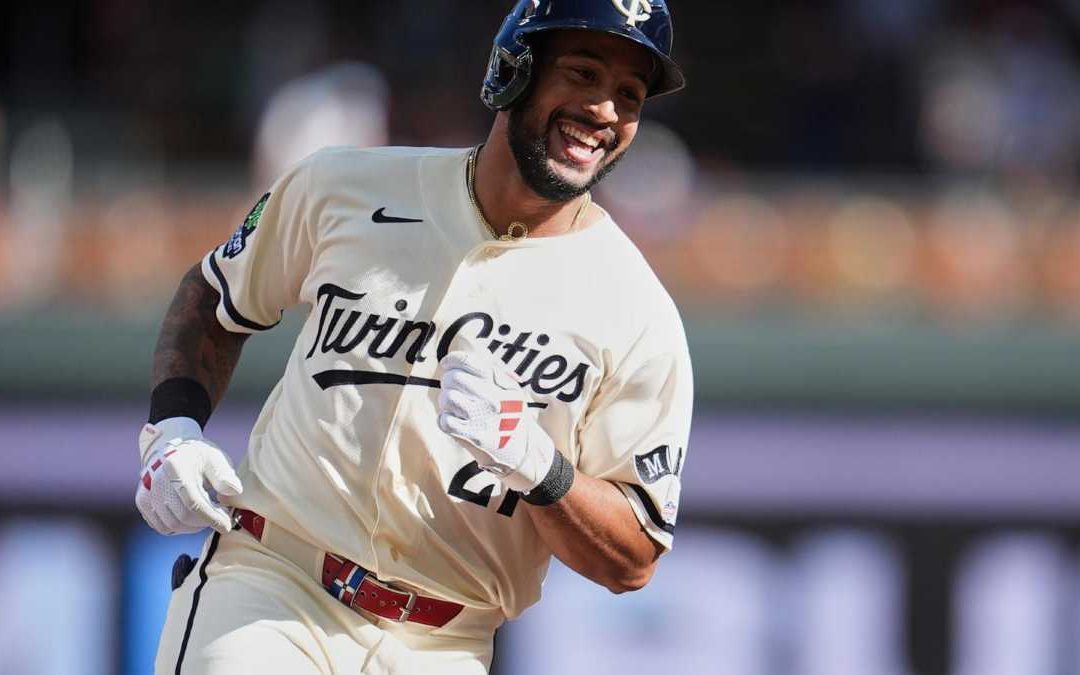
When it happened, he didn’t play it cool. “Very exciting, and full disclosure, I cried,” Rodríguez said through teammate Pablo López after getting the news Friday night, with his wife and son right there in their St. Paul apartment when the call came through. Saturday, batting ninth against Cleveland at Target Field, he turned his first career big-league at-bat into a home run — giving the Twins the lead in what became a 4-3 win over the Guardians. Baseball doesn’t usually hand out storybook endings this cleanly. This one showed up anyway.
Seven years, 353 games, one enormous amount of patience
The Twins signed Rodríguez out of Santiago, Dominican Republic, for a $2.5 million bonus back in July 2019 — a teenager with a rare combination of power and plate discipline that had scouts talking about him well before he ever got into a full-season game. He didn’t play at all in 2020 thanks to the pandemic wiping out the minor league season, and from there, the pattern that would define his entire minor league career set in early: he’s played just 353 games across six pro seasons, a total most prospects hit in three healthy years.
The injury list reads like a study in bad luck rather than a single chronic issue — a torn meniscus that ended his 2022 season, an abdominal strain in 2023, a thumb sprain in 2024 that he aggravated not once but twice trying to come back from it, then a combination of thumb, hip and oblique problems in 2025. Through all of it, he still managed to reach Triple-A at 22 years old and get himself onto national top-100 lists — Baseball America had him as high as 44th overall as recently as this August, remarkable given how little of a track record the injuries allowed him to build.
This year brought one more gut punch: a UCL sprain in his left thumb on May 1, sliding headfirst into first base, that required surgery and cost him nearly three months. Twins GM Jeremy Zoll didn’t hide that the timing mattered — “It was a real conversation,” he said of how close Rodríguez had been to a call-up before the injury hit. Rodríguez’s own read on it, delivered with a patience that seven years of setbacks apparently earns a person: “Everything happens at the right time. Earlier in the year, before the injury, I knew it was going to be my time, my moment. Things happen, but everything works out the way it’s supposed to work out.”
When he did get back on the field, he didn’t ease in — he hit for the cycle, in order, on September 1 in Omaha, part of a scorching 24-game stretch (.275/.411/.495, five homers) that made the decision to finally call him up an easy one. St. Paul hitting coach Shawn Schlechter put it plainly: “When he got back, and he hit the ground running, I believe it was probably one of the better versions we’ve seen of Emmanuel since I’ve known him in Rookie ball. He’s just a skilled player.”
There’s real practical urgency behind the timing, too — Rodríguez is out of minor league options heading into 2027, meaning the Twins either carry him on next year’s Opening Day roster or risk losing him on waivers. Saturday wasn’t just a nice moment. It was Minnesota starting to answer a real roster question.
The scouting report
RotoProspects has Rodríguez ranked No. 49 overall in our latest Top 700. Our grades on him, 20-80 scale: 40 Hit / 60 Power / 55 Speed / 55 Future Value. That’s a profile with a real carrying tool, a legitimate hole, and a future value that still lands in above-average-regular territory — a shape that tracks closely with a player who’s had almost no chance to refine his bat-to-ball skills against advanced pitching thanks to years of interrupted development.
Hit — 40: Below-average, and the clearest red flag on the card. It’s also the grade most directly explained by circumstance rather than bad bat-to-ball instincts: a player who’s totaled 353 games across seven professional seasons simply hasn’t gotten the repetitions most prospects get by 23. The plate discipline has shown up in the walk rates regardless, but pitch recognition and in-zone contact are skills built through volume, and volume is the one thing injuries have never let him accumulate.
Power — 60: Plus, and the tool that’s never been in question. From his $2.5 million bonus as a teenager through a cycle hit in order at Triple-A this September, the over-the-fence pop has shown up at every level he’s been healthy enough to play. Saturday’s first-at-bat homer is just the newest data point on a very long track record of raw thump.
Speed — 55: Above-average, rounding out a genuinely well-built athletic profile rather than a one-dimensional slugger. It’s not the carrying tool, but it adds a real dimension to the offensive game when he’s on the bases.
Future Value — 55: Comfortably above-average, which is a notable vote of confidence given the hit-tool question mark sitting right next to it. It’s a grade that says the power and speed alone are good enough to profile as a quality everyday player if the bat-to-ball skills stabilize even a little with actual major league reps — reps he’s finally getting a real chance to accumulate.
The debut
Rodríguez’s first big-league at-bat came against a Guardians pitching staff in a game the Twins badly needed, sitting eight games below .500 with the playoff math getting uglier by the day. He didn’t need a second look to feel comfortable — first pitch or not far from it, he put a ball over the fence, giving Minnesota an early lead it would eventually turn into a 4-3 win.
The context around the win mattered as much as the swing itself. The Twins (70-78) remain 4½ games back of the final AL Wild Card spot with four teams still ahead of them in the standings — a near-impossible climb with two weeks left. Manager Derek Shelton was straightforward about what this call-up is really about at this point in the season: “Number one, he has played well and deserves to be here. Number two, I think we want to get an opportunity to get a look at him going into next year.” This is evaluation season in Minneapolis now, not a pennant chase, and Rodríguez just turned in about as loud a first impression as that kind of look can produce.
The verdict: A home run in your first big-league at-bat is rare enough on its own; doing it after seven years and 353 games worth of injuries, surgeries, and setbacks makes it a genuinely great story regardless of what the rest of September holds. The swing was never really the question with Rodríguez — staying on the field long enough for the league to find out about it was. Saturday was one at-bat, not a guarantee of durability going forward. But for a player who’s spent his entire career being described in terms of what he “could” do if healthy, turning his first real opportunity into a home run trot is as strong an opening argument as he could have made.