
Fresh Cleats is our running look at the players stepping into the batter’s box — or back onto the mound — for the first time, whether that’s a true big-league debut or a hard-earned second chance. New face, new chapter, same question every time for fantasy baseball owners: is this the one that sticks?
There’s a certain kind of pitcher who gets the call not because everything’s figured out, but because the raw stuff has simply become impossible to ignore. Brody Hopkins is that pitcher right now, and Saturday, the Rays stopped ignoring it.
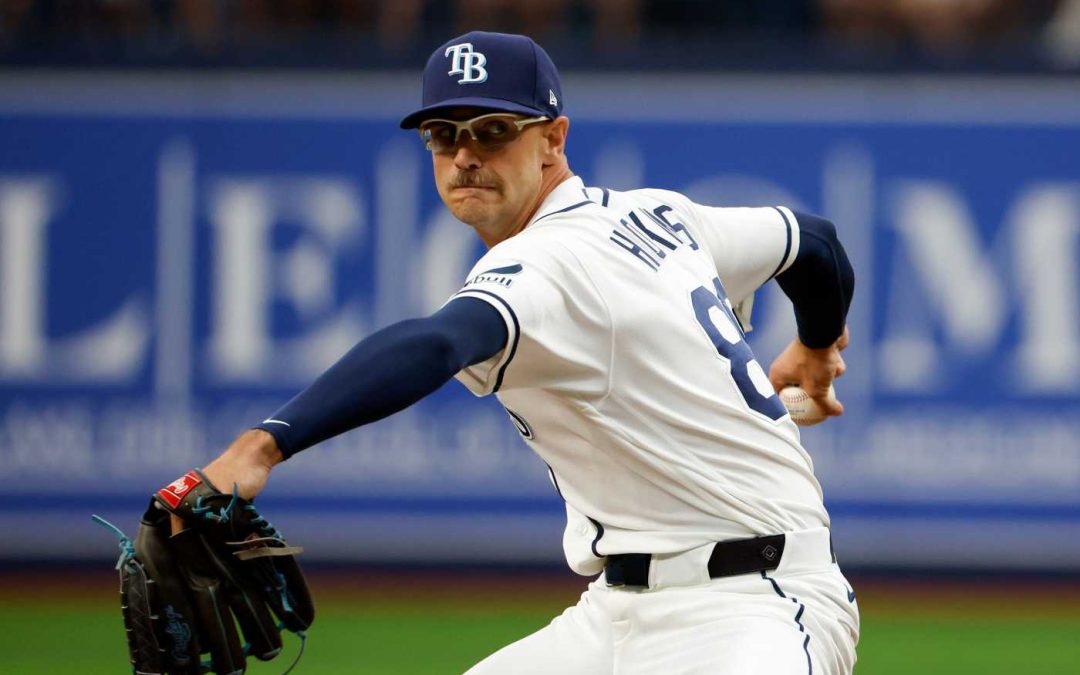
Tampa Bay selected Hopkins’ contract from Triple-A Durham before their game against Houston, and he made his major league debut out of the bullpen in a 3-2 win — logging his first career strikeout in the process. It capped a wild final stretch that saw him go from a struggling Triple-A starter to a shutdown reliever to a big leaguer, all inside about six weeks. Hopkins’ own description of the day: “everything that I’ve ever dreamed of.”
Two Hopkins boys, two big-league debuts
Brody isn’t even the first member of his family to make this walk. His older brother TJ played 25 games as an outfielder and DH for the Reds back in 2023 — meaning the Hopkins name has now shown up on both sides of a big-league box score within a few years of each other. Brody took a more circuitous route to get his own turn: Seattle drafted him in the sixth round (187th overall) out of Winthrop University in 2023, then flipped him to Tampa Bay at the 2024 trade deadline as part of the package that sent Randy Arozarena to the Mariners — a challenge-trade classic where teams disagree on which secondary piece is actually the prize. The Rays’ bet on Hopkins looks like the correct side of that argument right now.
The velocity spike, the walk problem, and the fix that actually worked
Hopkins came into 2026 with real prospect helium — 37th on Baseball America’s preseason Top 100 — built almost entirely around triple-digit stuff most Rays farmhands simply don’t carry. Baseball America’s scouting report called him blunt and simple: “Hopkins has the best stuff of any Rays minor league starter, with an all-out, all-power, all-the-time approach that is quite unusual for a starting pitcher,” grading his curveball as a 70 on the 20-80 scale — a true knockout pitch to go with a fastball that’s touched 102.1 mph in relief outings this year.
The stuff was never the question. The command was. As a starter this year at Triple-A Durham, Hopkins posted a 5.96 ERA with a brutal 92 walks in 94 innings — the kind of number that buries even electric arms if it doesn’t get fixed. By August’s preseason ranking updates, he’d actually fallen out of MLB Pipeline’s overall Top 100 entirely and slid from 37th to 81st on Baseball America’s list, prospect stock dropping in real time even as the raw velocity ticked up.
Then Tampa Bay made the move that’s rescued a hundred hard-throwing starters before him: they put him in the bullpen. The transformation was immediate. Across his last nine relief appearances at Durham, Hopkins posted a 3.00 ERA with 16 strikeouts and just five walks over 39 batters faced — command numbers from a completely different pitcher wearing the same jersey. His final tune-up before the call-up was the kind of outing that makes a front office stop debating: four of his 13 pitches clocked at 101-plus mph, a benchmark he’d only reached five times across 1,795 pitches at Triple-A all year, capped by a nasty 88 mph curveball that froze a hitter for a backwards strikeout.
The scouting report
RotoProspects has Hopkins ranked No. 166 overall in our latest Top 700. Our grades on him, 20-80 scale: 65 Fastball / 70 Curveball / 45 Changeup / 65 Cutter / 60 Future Value. That’s a loaded arsenal for a reliever profile — two true plus-plus-adjacent weapons in the fastball and curveball, a plus cutter giving him a real weapon against both sides of the plate, and only the changeup lagging as a real weakness. A 60 FV is a notably strong grade for a 166th-ranked prospect, reflecting significant late-season helium once the move to the bullpen unlocked the stuff.
Fastball — 65: Plus-plus raw velocity that’s flirted with elite territory in short bursts — 102.1 mph in a recent relief outing, with a career-long track record of sitting well above average even as a starter. In shorter stints, this grade plays up even further.
Curveball — 70: The headline pitch on the card, matching Baseball America’s own public grade almost exactly. A true knockout breaking ball capable of freezing hitters for backwards strikeouts — the pitch most likely to be his carrying weapon in high-leverage relief innings.
Changeup — 45: Below-average, and largely a non-factor in a bullpen role where he leans overwhelmingly on the other three pitches. Not a concern for a reliever profile the way it might be for a starter trying to turn a lineup over multiple times.
Cutter — 65: Plus, and an important complement to the fastball/curveball combo — gives him a weapon that can tunnel off the heater and eat into a hitter’s ability to simply sit on velocity.
Future Value — 60: Comfortably above-average, projecting a genuine high-leverage reliever or possibly more if the command holds against big-league bats. It’s a grade that reflects just how much better this profile looks in shorter bursts than it ever did trying to go multiple times through a lineup as a starter.
The debut
Tampa Bay beat Houston 3-2 on Saturday, with starter Ian Seymour striking out 10 over six strong innings before handing things to the bullpen. Hopkins’ turn came with mixed results: one inning of work, one hit, two runs (both earned), a walk, and a strikeout — his first career punchout, tucked inside a rockier line than the storybook version of this debut. The Rays’ bullpen as a whole still held the lead the rest of the way, and the win went in the books regardless, but Hopkins’ personal ledger reads like exactly what it was: a talented arm getting his feet wet against big-league hitters for the first time, triple-digit stuff and all.
The corresponding roster moves still told their own story about how much Tampa Bay wanted this specific arm right now — right-hander Alex Cook optioned out, right-hander Michael Grove designated for assignment, both purely to clear a 40-man spot for a reliever who, coming in, had thrown zero big-league pitches in his career.
The verdict: Two earned runs in his first inning of major league work isn’t the shutdown storybook debut Hopkins probably pictured, but it’s also exactly the kind of rocky first outing that rarely means much on its own — especially for a power arm whose whole carrying trait is swing-and-miss stuff, not immediate polish. The strikeout is real. So is the walk and the two runs. What matters far more than one inning is whether the command gains he flashed over his final nine Triple-A relief appearances (a 3.00 ERA, just five walks in 39 batters faced) show up more often than not from here — and one shaky debut inning isn’t nearly enough evidence to answer that question either way.